




Couldn't load pickup availability
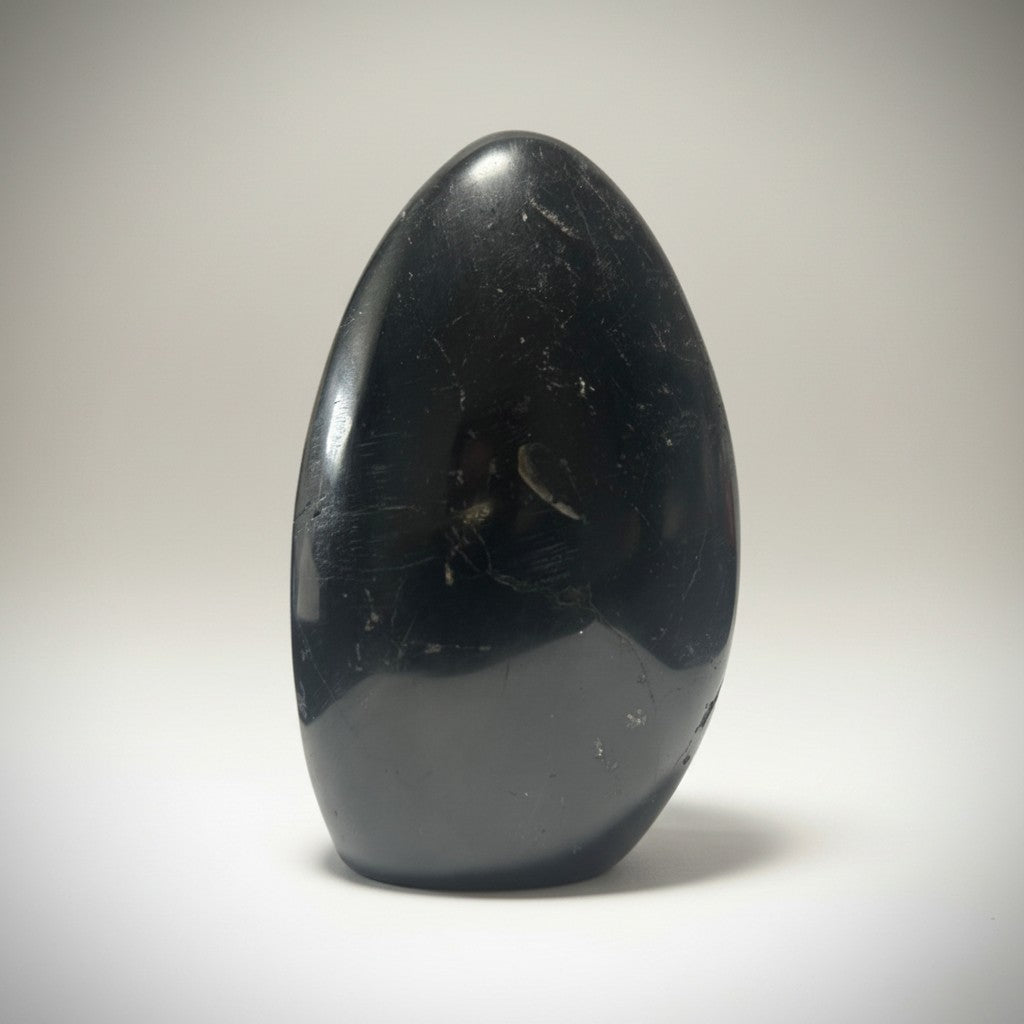
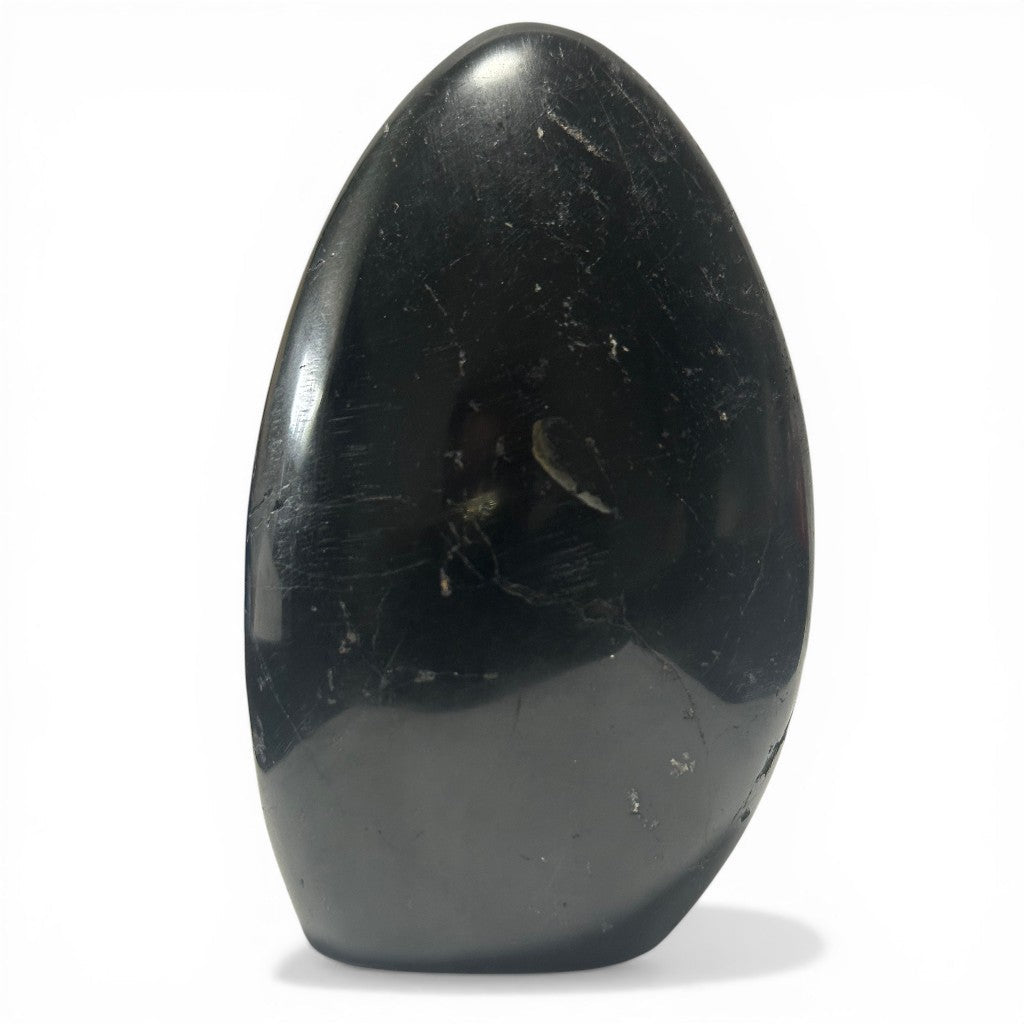
*** UNIQUE PIECE ***
Dimensions:
Height: 12cm
Length: 11cm
Depth: 3.5cm
The name tourmaline comes from “turmali” or “turamali” which is actually a Sinhalese name given to this fabulous stone from Sri Lanka by Dutch explorers in the early 18th century.
In Sri Lanka, legend has it that tourmaline comes from the sky and, as it descends to earth, passes through a rainbow that gives it its color variations. This explains the origin of its name, which means "the stone of a thousand colors."
In fact, tourmaline has been known for thousands of years. Traces of this stone were found in the 3rd century BC. In Greece, it was Alexander the Great (356-323 BC) who brought this stone back from his expeditions. However, tourmaline, due to its many colors, has often been confused with other minerals.
Thus, there are very few legends or myths attached to this stone due to its late identification. However, some tourmalines have piezoelectric properties, meaning they possess an electrical charge, negative at one pole and positive at the other. Tourmaline attracts particles to itself.
When the philosopher Theophrastus (-322 to -288) described a stone with the ability to attract pieces of straw or pieces of wood, we understand that he is talking about tourmaline. Later in the 18th century, Dutch explorers used tourmaline to clean their pipes, because the stone attracted ashes.
As an aside, in the 16th century, a Spanish conquistador discovered a green tourmaline in Brazil, which he identified as an emerald. This discovery sparked a rush in Brazilian regions in search of these famous emeralds. The error was corrected in the 19th century, and the emeralds were transformed into tourmalines.
Often mistaken for precious stones, tourmalines are found in many pieces of jewelry, even in the British crown. Other examples include the Timur Ruby, a 352-carat jewel that was thought to be a ruby until 1851, or the 170-carat Black Prince Ruby, which is actually a tourmaline.
Tourmaline is attracting increasing interest from connoisseurs and collectors. The Chinese Empress Cixi (1861-1908) was so fond of this stone that she began collecting it. She commissioned sculptures, brooches, watch clasps, rings, and other items to be made from it. Today, she rests on a cushion of tourmalines.
Tourmaline comes in various shades. They can also be bi-colored or multicolored. There is a wide variety of tourmalines, ranging from opaque to transparent, with striated or hexagonal structures. It has a rhombohedral crystal system. It is an igneous and metamorphic rock that can originate from hydrothermal deposits.
Thus, there are several types of tourmalines with varied compositions such as magnesium silicates, sodium silicates, iron silicates, clay silicates, fluorides, and borosilicate silicates. Tourmalines are actually an entire family of stones, which have the same internal structure, but differ in chemical composition and therefore in color and appearance.
The main deposits are located in Brazil, Afghanistan, Australia, Brazil, Russia, Thailand, Burma, Madagascar, India, and the United States.
Black tourmaline is the most well-known variety of tourmaline. It is also known as schorl. It is said to be black, but it can also be dark brown. It has gained notoriety over time due to its many properties.
So black tourmaline, schorl, is the most common tourmaline and can sometimes measure up to 2 m high. Its very rich iron composition gives it this black, opaque and intense appearance. We can emphasize that it is the only type of tourmaline with a uniform color.
Schorl, a mineral type of tourmaline, belongs to the silicate group, subgroup of cyclosilicates. The name "schorl" comes from German. It has a vitreous luster, with a conchoidal fracture, and its line is white. It is a mineral from metamorphic rocks, leucogranites, and pegmatites.
Like all tourmalines, schorl is composed of a complex silicate of boron, sodium, and aluminum and has a hardness of 7 to 7.5 on the Mohs scale. Its crystal system is rhombohedral. Schorl, or black tourmaline, occurs as elongated, well-formed, prismatic crystals with striated elongation, or as small aggregates of small crystals.
Black tourmaline is a very ancient stone, cited in many traditions, notably among the Brazilians, Egyptians, Greeks, and Indians. It is a stone renowned for its protective properties. It is also a grounding stone used today in lithotherapy and meditation. Due to its piezoelectric properties, black tourmaline is also used in electrochemistry.
The main deposits are located in Brazil, Madagascar, etc.
In lithotherapy, tourmaline is a very powerful grounding stone. It helps keep one's feet on the ground, calms scattered thoughts, and refocuses attention. It soothes the mind and unreasonable fears. It allows one to connect with one's inner self, perceive deep needs, and identify the cause of certain blockages. These are often childhood traumas. It is an excellent meditation stone that channels the mind's wanderings.
Thus, schorl has strong protective virtues. It is capable of absorbing negative energies released by certain angry, jealous, or envious people. It is said to neutralize harmful influences and to be able to absorb electromagnetic waves. It is a stone of protection for both people and places. Placing various black tourmalines in the house, wearing a black tourmaline bracelet allows the person or home to be protected. This black stone removes the negative consequences of an unhealthy environment or waves from household appliances (telephone, computers, etc.).
Black tourmaline helps deflect negative thoughts, improving concentration, creativity, inspiration, and imagination. It is recommended for children or hyperactive individuals. It helps restore serenity and harmony. The wearer is calmer, less anxious, and less fearful. They find peace and wisdom.
Color :
Astrological sign:
Stone Type:
Age :
Gender :


The properties described come from the tradition of crystal healing and are neither medical advice nor health advice. For any health problem, consult a professional.