

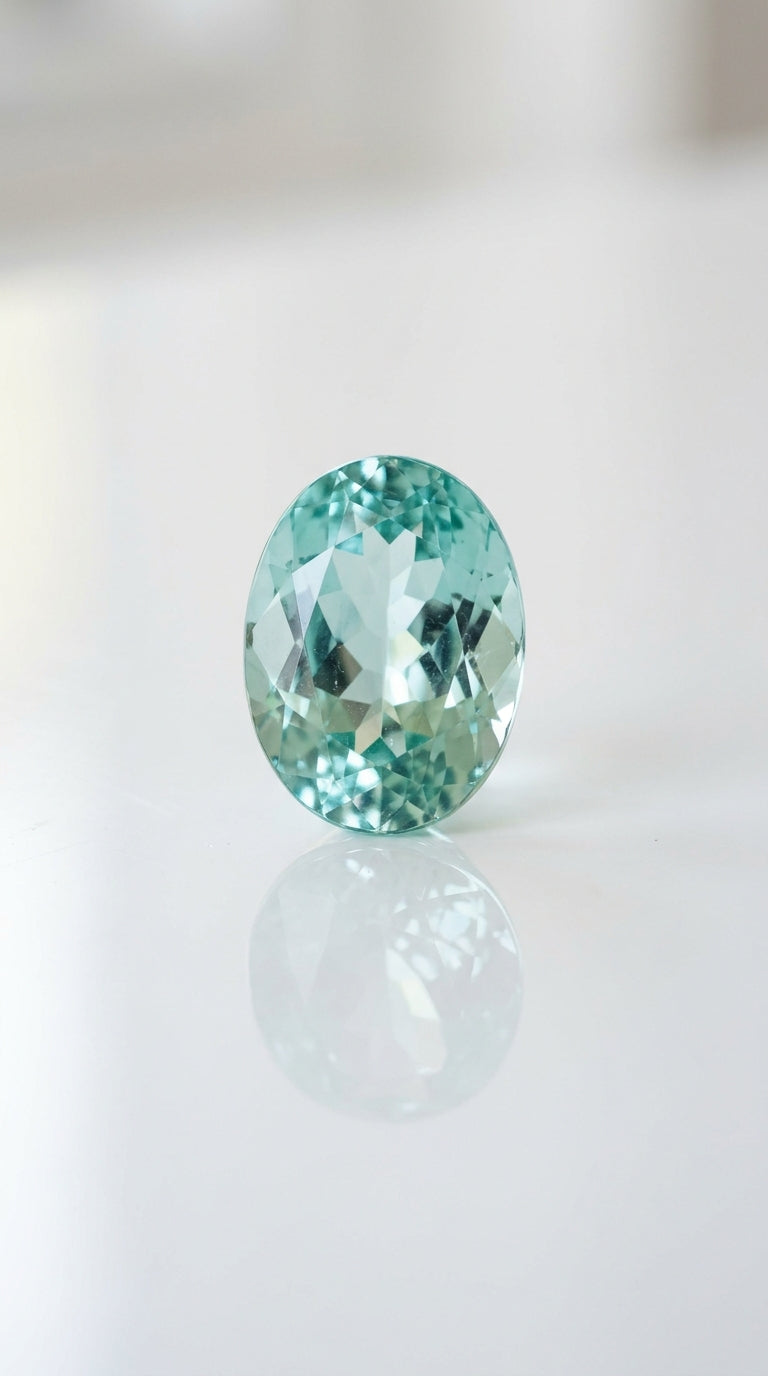
Multicolored beryl bracelet Brazil A (grains 5-7mm)
- Vitality
- Purity
- Wisdom
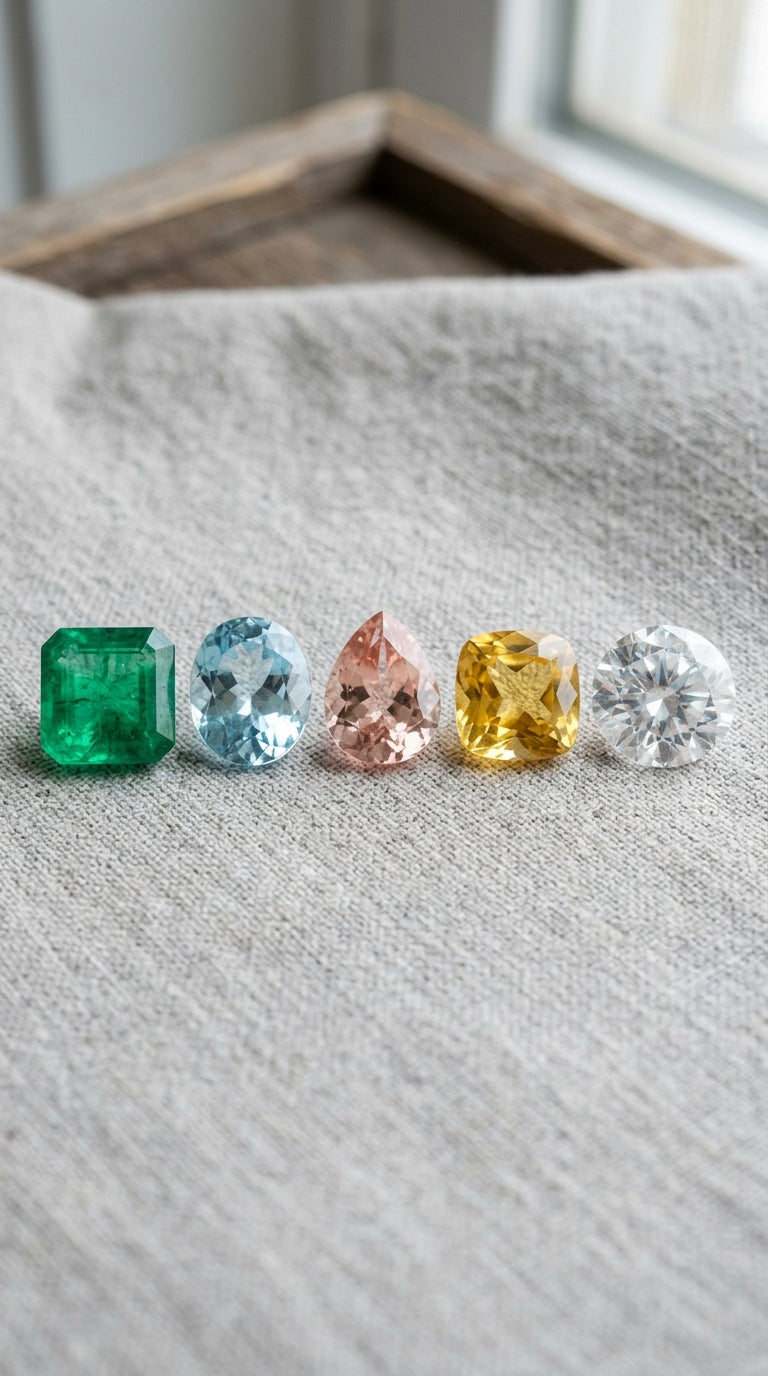
CYCLOSILICATE · BE₃AL₂SI₆O₁₈ · THE FAMILY CONTAINING THE WORLD'S MOST PRECIOUS STONES
Identification
Be₃Al₂Si₆O₁₈ · cyclosilicate de béryllium et aluminium · structure hexagonale
7,5 à 8 / 10 — l'une des familles les plus dures et robustes · idéale pour tous les bijoux quotidiens
2,63 à 2,92 selon la variété · légère pour sa dureté
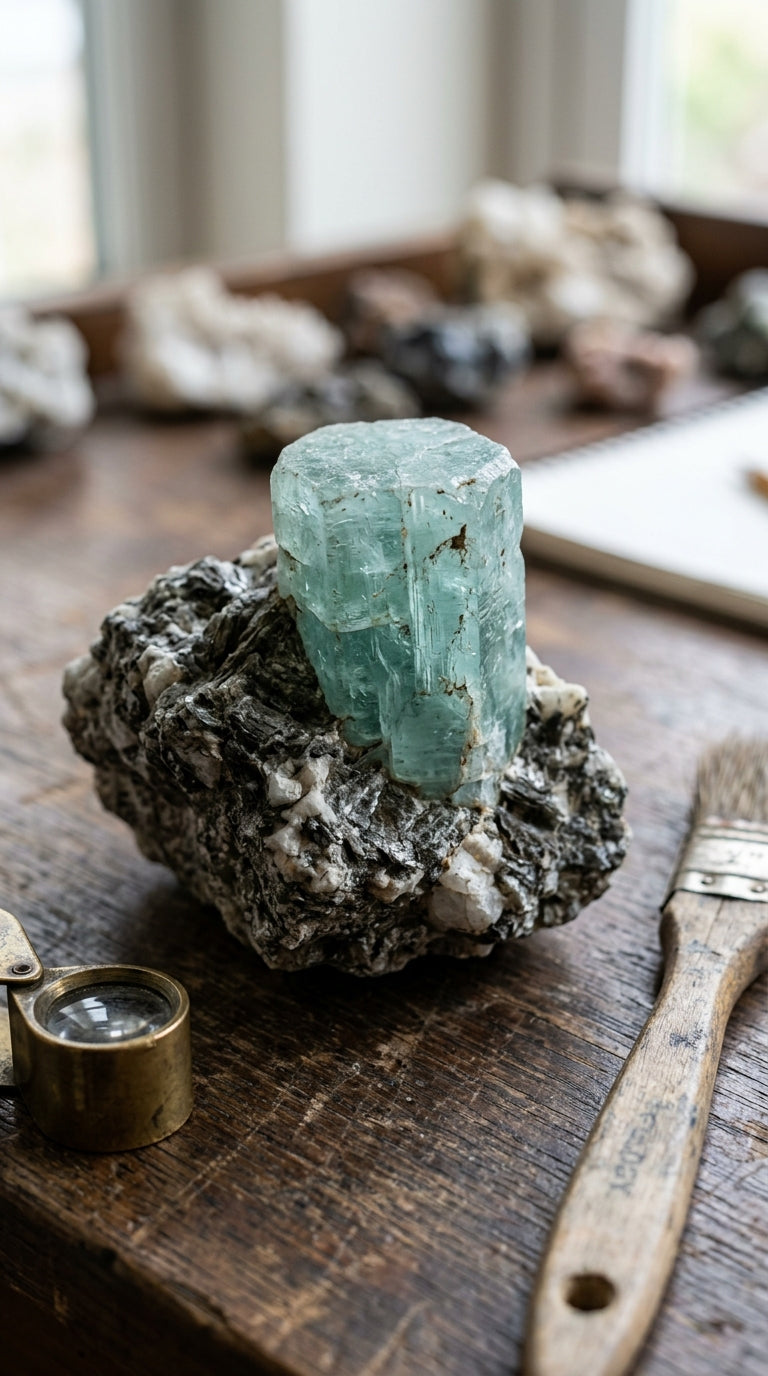
Prismes hexagonaux bien formés, souvent très grands · cristaux pouvant atteindre plusieurs kilos voire tonnes
Excellente dans la plupart des variétés · l'émeraude est l'exception avec ses "jardins" acceptés
Brésil (Minas Gerais — toutes variétés) · Colombie (émeraude) · Afghanistan · Pakistan · Madagascar · Russie
Du grec bēryllos · terme antique désignant les gemmes de cristal vert-bleu · ancêtre des mots "brillant" et "berille"
Taureau · Vierge · Balance · varie selon la couleur/variété
Béryllium (Be) · métal alcalino-terreux rare · donne la structure cristalline hexagonale caractéristique
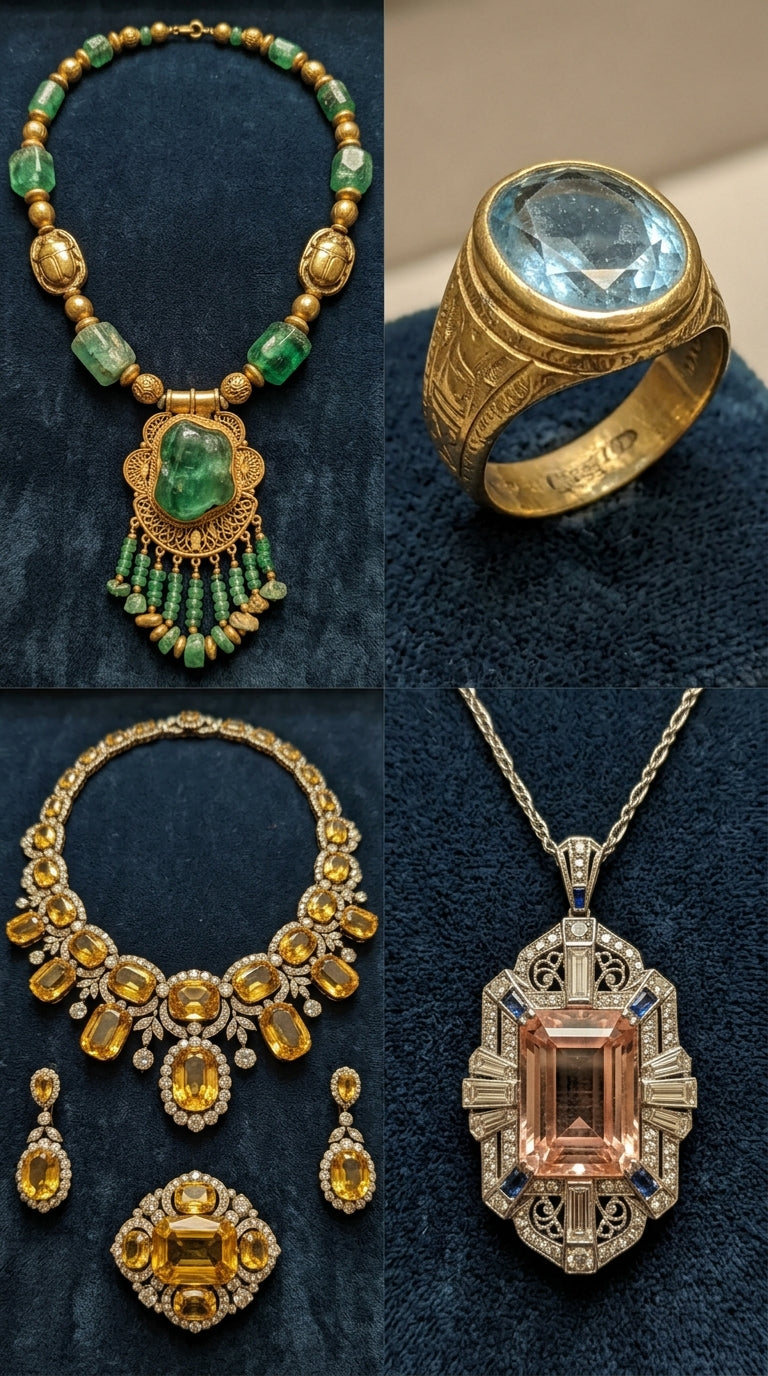
Pierre des noces de béryl — symbole de lumière et de durabilité à travers le temps
History & Myths

Mineralogy
Lithotherapy
Matches
Daily use
Interview


Monetization
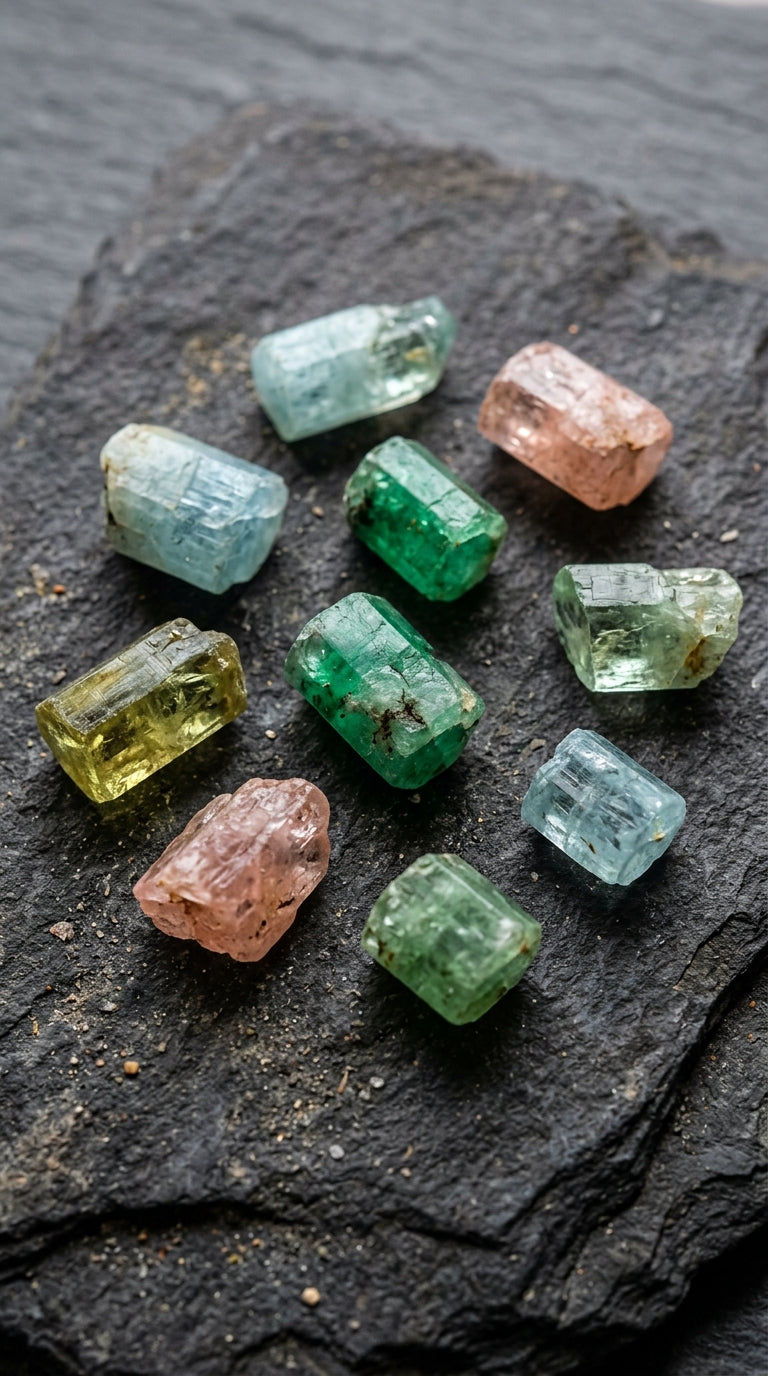
| Héliodore | Jaune-doré |
200 € / ct |
| Goshenite | Incolore |
250 € / ct |
| Morganite | Rose-pêche |
800 € / ct |
| Aigue-marine | Bleu ciel |
2 000 € / ct (Santa Maria) |
| Émeraude | Vert profond |
50 000 €+ / ct (Colombie) |
| Béryl rouge | Rouge |
50 000 €+ / ct |
18 products


Our team of enthusiasts will respond within 24 hours · Free personalized advice
⚠️ Reminder: The meanings and virtues attributed to stones come from lithotherapy traditions and cultural symbolism. They do not constitute medical or psychological advice in any way.
The properties described come from the tradition of crystal healing and are neither medical advice nor health advice. For any health problem, consult a professional.


