



Couldn't load pickup availability
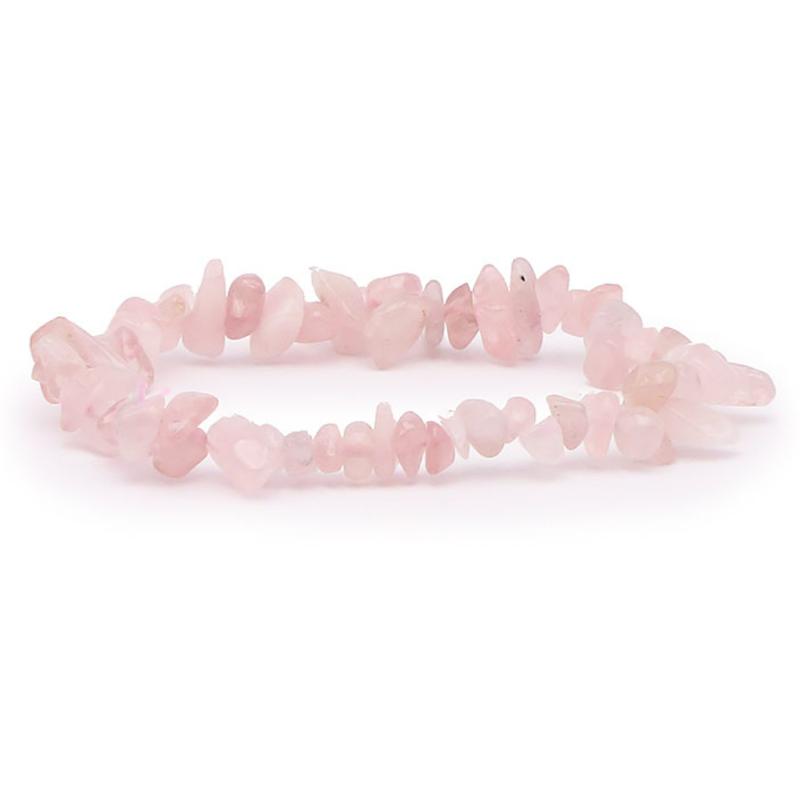
Beautiful Brazilian rose quartz bracelet, made of polished baroque stones in delicate shades of pale pink, powder pink and rosy white.
A classic among natural stones, rose quartz captivates with its soft colors and timeless elegance. The irregular shapes and natural variations in shade give each bracelet a unique character.
This Grade A Brazilian rose quartz bracelet is made of polished natural stones in a baroque shape.
Rose quartz is one of the most well-known varieties of quartz. It is characterized by a color ranging from very pale pink to a more intense pink, sometimes with whitish or slightly translucent areas.
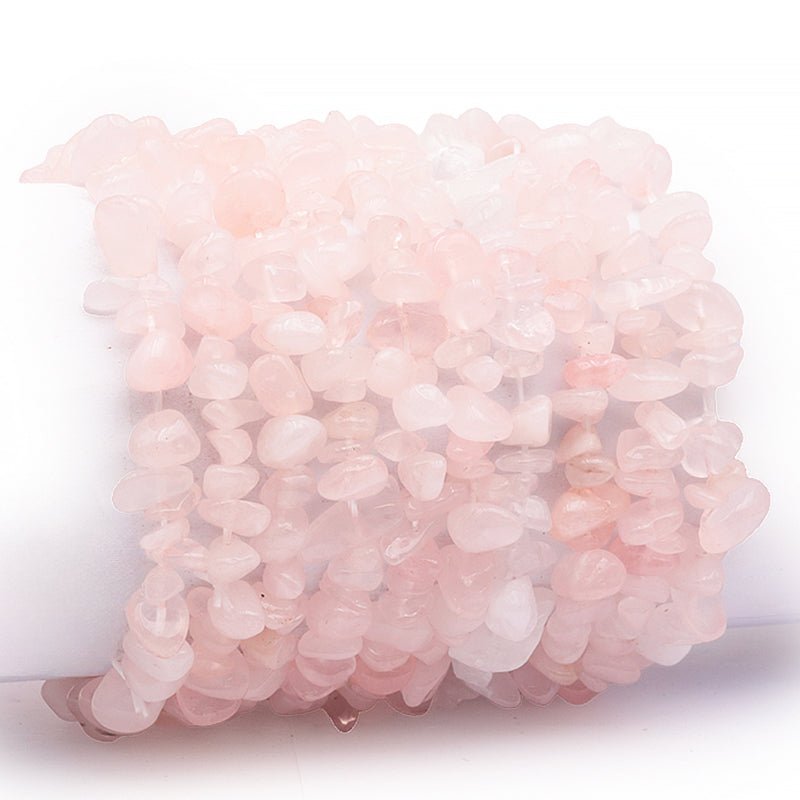
The stones may show small inclusions, internal veils, and varying intensities of color. These peculiarities attest to their natural character and make each bead different.
Baroque beads have intentionally irregular shapes, giving the bracelet a more authentic and mineral appearance than perfectly round and calibrated beads.
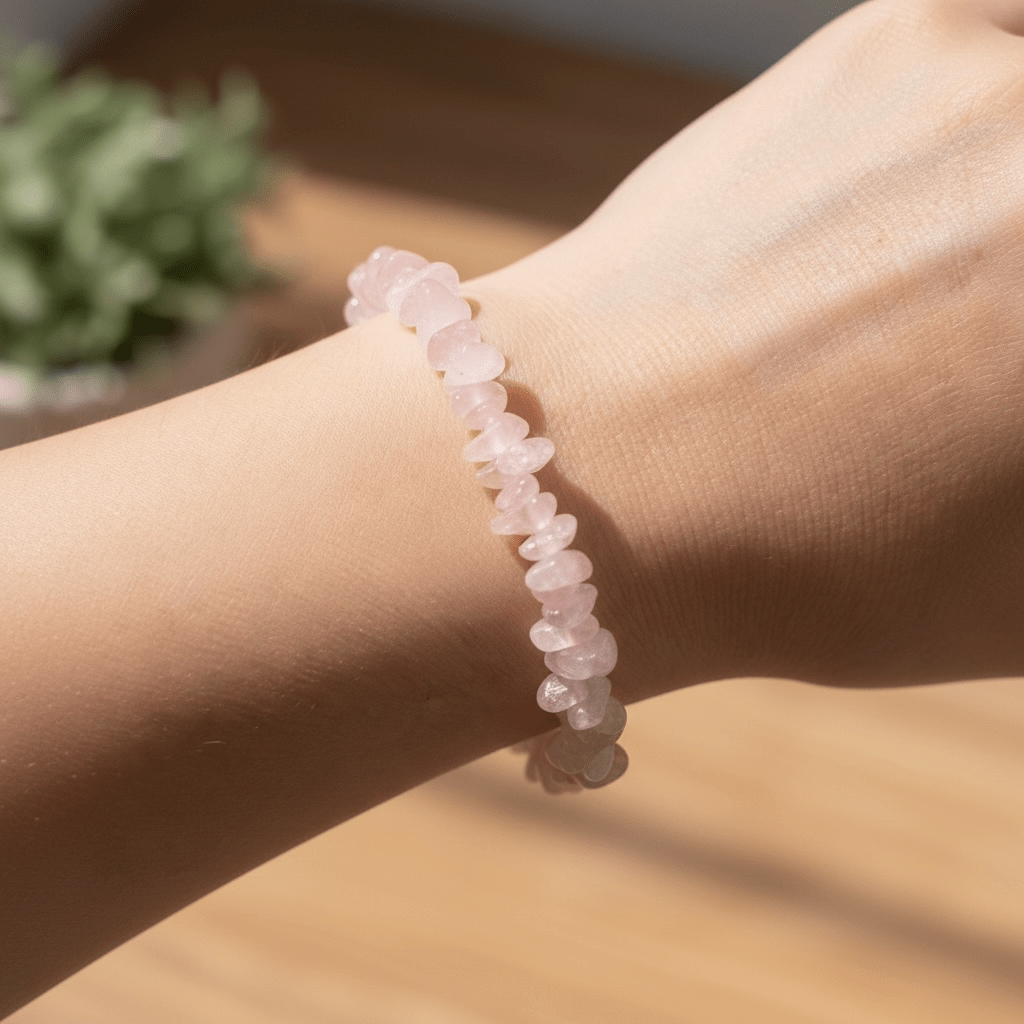
With a length of approximately 17 to 18 cm, this elastic bracelet is suitable for wrists measuring approximately 16 to 18 cm. Its very light weight of about 5 g makes it easy to wear daily.
The shapes, patterns, inclusions, transparencies, and shades of pink may vary from one stone to another and from one bracelet to another. Each item is unique.
Stone: Rose Quartz
Mineral family: Quartz
Origin: Brazil
Grade: A – Good quality
Shape: Polished baroque stones
Dimensions: Approximately 17 to 18 cm
Recommended wrist size: 16 to 18 cm
Weight: Approximately 5 g
Assembly: Elastic bracelet
Colors: Pale pink, powder pink, rosy white
Transparency: Opaque to translucent depending on the stones
In lithotherapy, rose quartz is traditionally considered one of the main stones associated with love, gentleness, and emotional appeasement.
It would be particularly valued for symbolically fostering an atmosphere of tenderness and serenity and for accompanying periods when more calm is sought.
Rose quartz is also associated with self-love, emotional trust, and benevolence. It would be used to symbolically help accept emotions and promote more harmonious relationships.
In lithotherapy traditions, it is also often chosen as a companion stone to promote a soft and reassuring atmosphere in a bedroom or resting space.
Rose quartz is primarily associated with the heart chakra, traditionally linked to love, feelings, compassion, and relationships with others.
The properties attributed to stones are derived from lithotherapy traditions and beliefs. They do not replace a diagnosis, treatment, or medical advice.
Rose quartz is a variety of quartz, whose main chemical composition is silicon dioxide (SiO₂).
It therefore belongs to the same large mineral family as rock crystal, amethyst, citrine, or smoky quartz.
It is easily recognizable by its characteristic pink color, which can be very pale or more intense depending on the specimens.
Rose quartz is generally translucent to opaque, and perfectly transparent crystals are much rarer.
The coloration of rose quartz is linked to its structure and the presence of very fine inclusions or microscopic elements.
Mineralogical research has notably highlighted, for many massive rose quartz samples, tiny fibrous inclusions responsible for their coloration.
The color can therefore vary considerably from one deposit and one specimen to another.
Brazil is one of the world's major sources of quartz, particularly rose quartz.
Brazilian deposits provide stones with a wide variety of shades, ranging from almost white pink to more intense pink.
Brazilian rose quartz is widely used for making jewelry, tumbled stones, decorative objects, and collector's pieces.
Rose quartz and pink opal can have relatively similar colors, but their mineralogical nature is different.
Rose quartz is a crystalline variety of quartz mainly composed of SiO₂.
Pink opal is a hydrated silica, naturally containing a certain amount of water and having a different structure.
Rose quartz generally has a vitreous to slightly milky appearance, while pink opal can have a softer or waxy appearance.
Morganite is a pink to peach variety of beryl, a family to which aquamarine also belongs.
It can exhibit beautiful transparency and a more pronounced luster when it is of gem quality.
Rose quartz, on the other hand, belongs to the quartz family and often has a milkier appearance.
The two stones are therefore completely different despite their sometimes similar colors.
Brazil is particularly renowned for the richness and diversity of its quartz deposits.
Rose quartz has been extracted there for a long time and is one of the most widely used pink stones in the manufacture of natural stone jewelry.
Its soft color, good resistance, and generally affordable price largely explain its popularity.
Baroque beads have irregular shapes, unlike perfectly calibrated round beads.
Each quartz thus has its own shape, shade of pink, inclusions, and degree of transparency.
Some stones can be almost white while others will show a distinctly more intense pink.
Each bracelet therefore has its own combination of shapes and shades and may differ slightly from the photographs presented.
Rose quartz has good hardness and is well suited for jewelry making.
However, it is advisable to avoid significant shocks, chemicals, perfumes, and household products.
Prolonged exposure to strong sunlight is also not recommended, as the color of some rose quartz can gradually fade.
For routine cleaning, use a soft, slightly damp cloth, then carefully dry the stones.
A natural stone with recognized virtues in lithotherapy, rock crystal accompanies daily life with gentleness. Find all our rock crystal bracelets.
Color :
Astrological sign:
Stone Type:
Age :
Gender :


Les vertus décrites relèvent de la tradition de la lithothérapie et ne constituent ni un avis médical ni un conseil de santé. En cas de problème de santé, consultez un professionnel.