



Couldn't load pickup availability
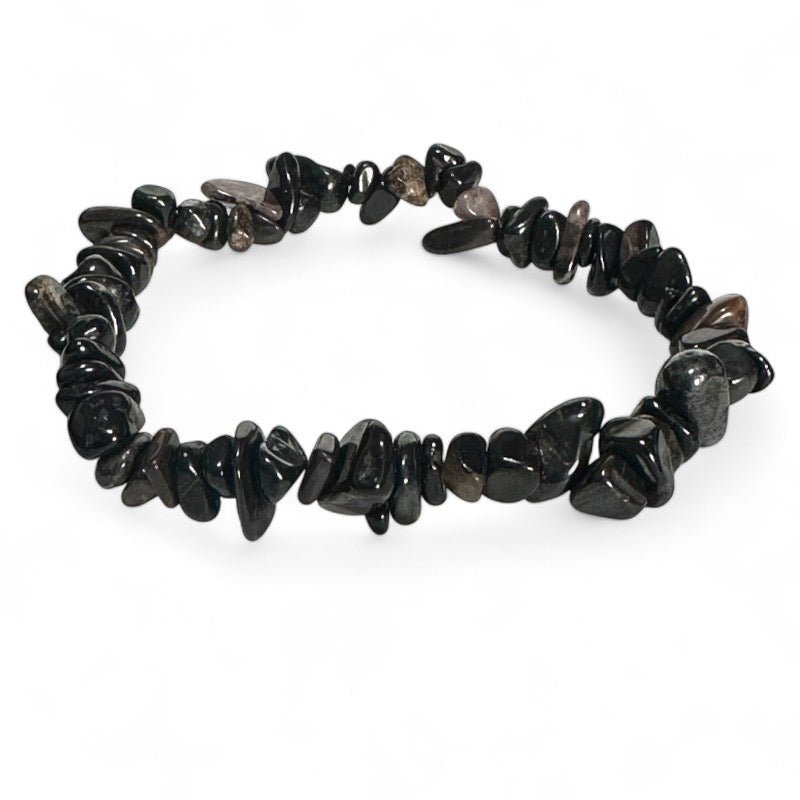
Bracelet made of South African sugilite, composed of polished baroque stones featuring natural shades of purple, mauve, crimson, purplish-pink, and sometimes darker areas.
This grade B - medium quality selection exhibits more heterogeneous colors and patterns than higher qualities, making this sought-after stone available at a more accessible price point. Each bracelet naturally has its own unique appearance.
This grade B South African sugilite bracelet is made of natural polished baroque-shaped stones.
Sugilite is a relatively rare silicate mineral, particularly prized for its characteristic purple tones. Depending on the quality and composition of the stone, its colors can range from light mauve to deep purple, with pinkish, grayish, brownish, or almost black areas.
In nature, sugilite is frequently found associated with other minerals. Stones used in jewelry can therefore exhibit significant patterns, inclusions, and color variations.
This grade B - medium quality selection may show a greater proportion of matrix, less intense or less homogeneous colors, and more dark areas than higher grades. These variations are part of the material's natural appearance.
Baroque stones have irregular shapes that enhance the authentic and mineral character of the bracelet.
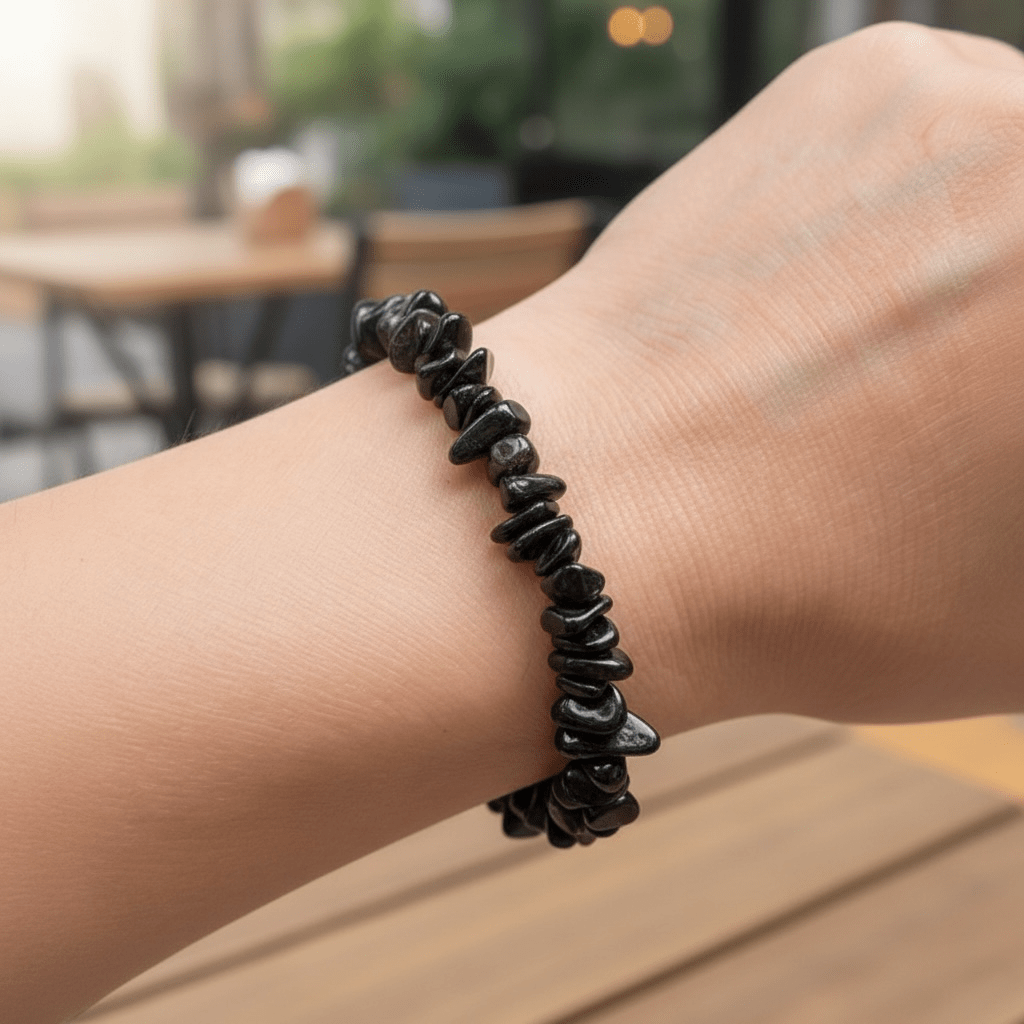
With a length of approximately 17 to 18 cm (6.7 to 7.1 inches), this elastic bracelet is suitable for wrists measuring approximately 16 to 18 cm (6.3 to 7.1 inches). Its weight of approximately 14 g (0.5 oz) gives it a nice presence on the wrist.
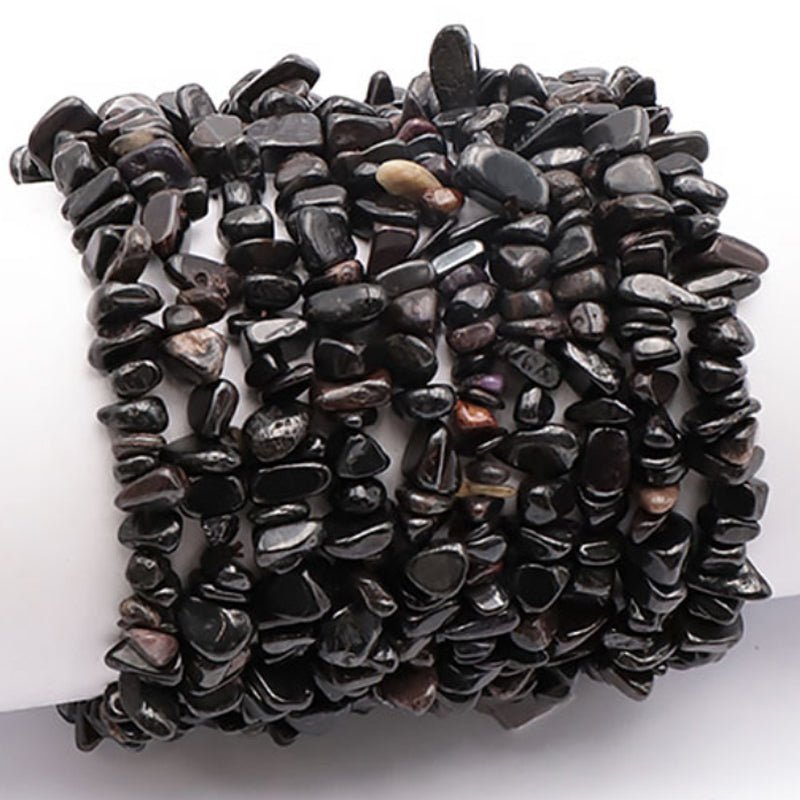
The shapes, patterns, inclusions, proportions of matrix, and shades of purple can vary significantly from one stone to another and from one bracelet to another. Each item is unique.
Stone: Sugilite
Mineral family: Silicates
Origin: South Africa
Grade: B – Medium Quality
Shape: Polished baroque stones
Dimensions: Approximately 17 to 18 cm (6.7 to 7.1 inches)
Recommended wrist size: 16 to 18 cm (6.3 to 7.1 inches)
Weight: Approximately 14 g (0.5 oz)
Mounting: Elastic bracelet
Colors: Purple, mauve, crimson, purplish-pink, black, and variable shades
Special feature: Naturally variable patterns and matrix
In lithotherapy, sugilite is traditionally associated with emotional soothing, serenity, and spirituality.
It is said to be particularly valued for symbolically accompanying periods of stress and tension, promoting a calmer state of mind and greater perspective.
Sugilite is also associated with self-confidence and self-acceptance. It is traditionally used to help better understand emotions and regain better inner balance.
It also holds strong symbolism related to intuition, meditation, and spiritual development.
In lithotherapy, sugilite is primarily associated with the crown chakra and the third eye chakra, traditionally linked to intuition, consciousness, and spirituality.
The properties attributed to stones come from lithotherapy traditions and beliefs. They do not replace a diagnosis, treatment, or medical advice.
Sugilite is a mineral belonging to the silicate family, discovered in the 20th century.
It is particularly known in the world of gemstones for its superb colors ranging from purplish-pink to intense crimson.
However, not all sugilites are purple. Some specimens may exhibit much more discreet colors, particularly grayish, brownish, or yellowish.
It is the purple and crimson varieties that are most sought after for jewelry making.
The characteristic purple coloration of many sugilites is primarily associated with the presence of manganese in their structure.
Depending on the composition and concentration of the elements present, the color can vary considerably.
The most sought-after stones generally exhibit an intense and relatively homogeneous purple, while more common qualities may show more matrix and highly variable tones.
Although sugilite was initially identified in Japan, it is primarily South Africa that has become famous for the purple varieties used as ornamental stones.
South African deposits have provided some of the most well-known purple sugilites on the market.
This origin is therefore particularly sought after by stone and mineral enthusiasts.
For this bracelet, grade B corresponds to medium quality.
Compared to a higher-grade sugilite, the stones may notably exhibit a less sustained or less homogeneous purple color, more matrix, more dark areas, and greater variations between different beads.
This allows this generally sought-after stone to be offered in a more accessible range.
It is important to remember, however, that grades A, AA, AAA, or B do not correspond to a standardized international gemological classification. They are essentially commercial classifications used to differentiate several selections from the same supplier or seller.
Sugilite and charoite can be confused due to their magnificent purple tones.
Charoite, primarily known in Russia, generally has very characteristic fibrous, swirling, and pearlescent patterns.
Sugilite more often presents compact purple areas, marbled, or associated with a dark matrix.
In any case, they are two completely different minerals.
Sugilite can also be confused with amethyst solely because of its color.
Amethyst is a purple variety of quartz and frequently occurs as transparent to translucent crystals.
Sugilite used in jewelry is generally opaque, with a more massive appearance and very different patterns.
Their mineralogical composition is also completely different.
Purpurite is another purple stone sometimes confused with sugilite.
Purpurite is a manganese and iron phosphate, while sugilite belongs to the silicate family.
Purpurite often has a duller appearance when not highly polished, while sugilite can develop a beautiful luster after polishing.
Stones marketed as sugilite may consist of sugilite associated with different minerals from the host rock.
A stone with many dark areas is therefore not necessarily entirely composed of pure purple sugilite.
This is a particularly important point for a grade B selection: the visible quantity of purple material can vary greatly between stones.
For a transparent product description, it is therefore preferable not to imply that each bead is composed exclusively of pure purple sugilite.
High-quality sugilite is considered a relatively rare stone, especially when it exhibits an intense and homogeneous purple color.
The value strongly depends on the color, the quantity of sugilite present, the importance of the matrix, and the overall appearance of the material.
Very purple qualities can thus reach significantly higher values than materials with a lot of matrix.
Baroque stones have irregular shapes, unlike perfectly calibrated round beads.
This finish is particularly well suited to a grade B sugilite selection because it retains the natural character and the various mineral associations of the stone.
Some beads may have more purple while others will contain a significant proportion of dark areas or matrix.
Each bracelet therefore has a different distribution of colors and may differ significantly from the photographs shown.
Sugilite requires some precautions to maintain its appearance and polish.
Avoid strong impacts, chemicals, perfumes, and household products.
For routine cleaning, use a soft, slightly damp cloth, then carefully dry the stones.
As a precaution, avoid ultrasonic or steam cleaning.
To also preserve the elastic thread, remove your bracelet before showering, swimming, or engaging in sports activities.
You like this stone? Learn more about sugilite and its properties, or browse our sugilite bracelets directly.
Color :
Astrological sign:
Stone Type:
Age :
Gender :


Les vertus décrites relèvent de la tradition de la lithothérapie et ne constituent ni un avis médical ni un conseil de santé. En cas de problème de santé, consultez un professionnel.