



Couldn't load pickup availability
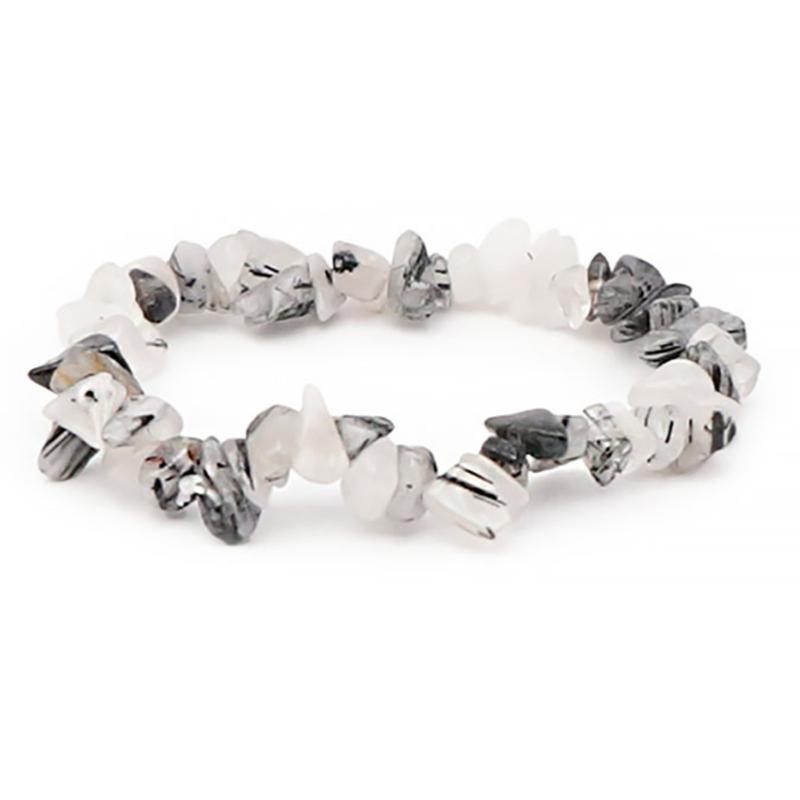
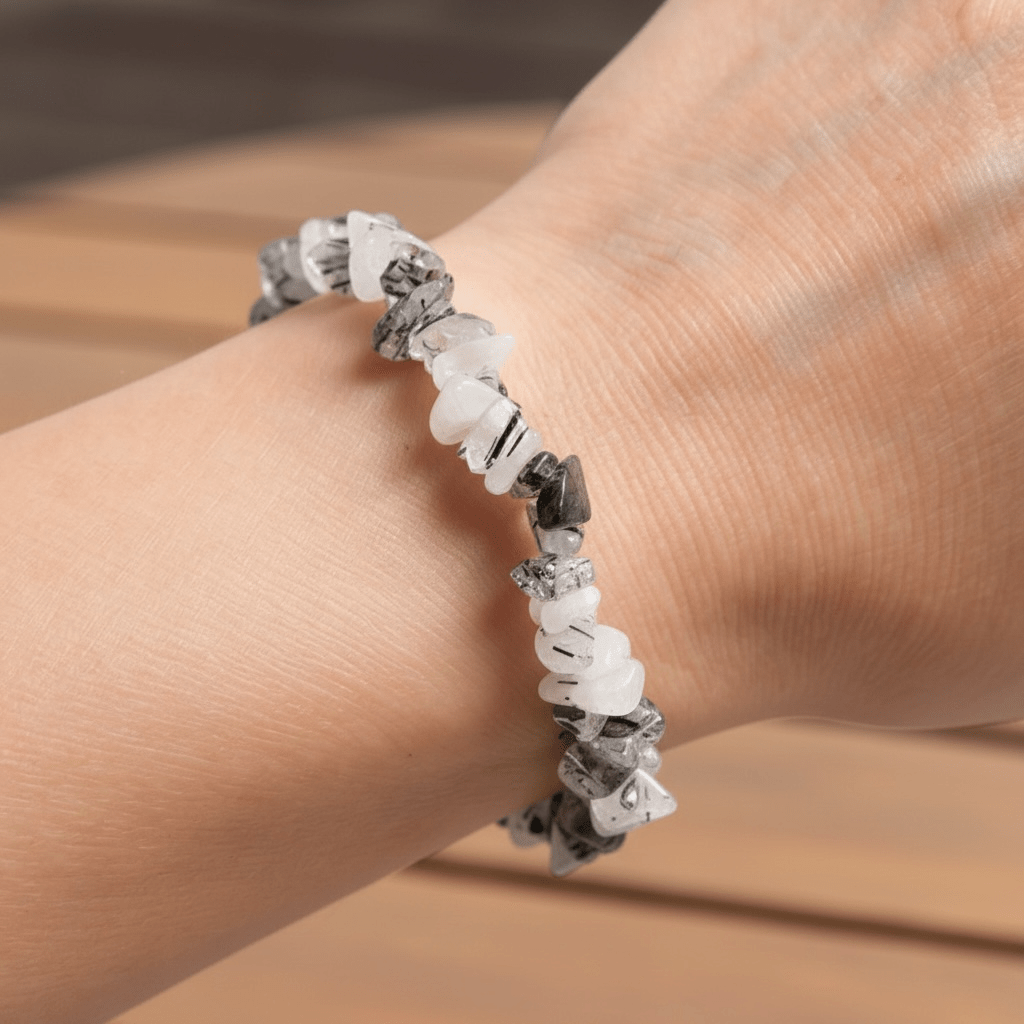
Beautiful tourmalated quartz bracelet from Brazil, made of baroque quartz beads featuring fascinating natural black tourmaline inclusions.
The contrast between the transparency of the quartz and the dark needles or filaments of tourmaline creates spectacular patterns, different in each stone. A bracelet with a very mineral character where each piece is truly unique.
This Grade A tourmalated quartz bracelet from Brazil, commonly called tourmalinated quartz, is composed of polished natural stones of baroque shape.
Tourmalated quartz is a quartz in which tourmaline inclusions have developed, usually black tourmaline (schorl).
These inclusions can take the form of fine needles, filaments, rods, or small black clusters trapped within the quartz.
The contrast is particularly aesthetic: the quartz can be transparent, translucent, or slightly milky, while the tourmaline inclusions appear black or very dark gray.
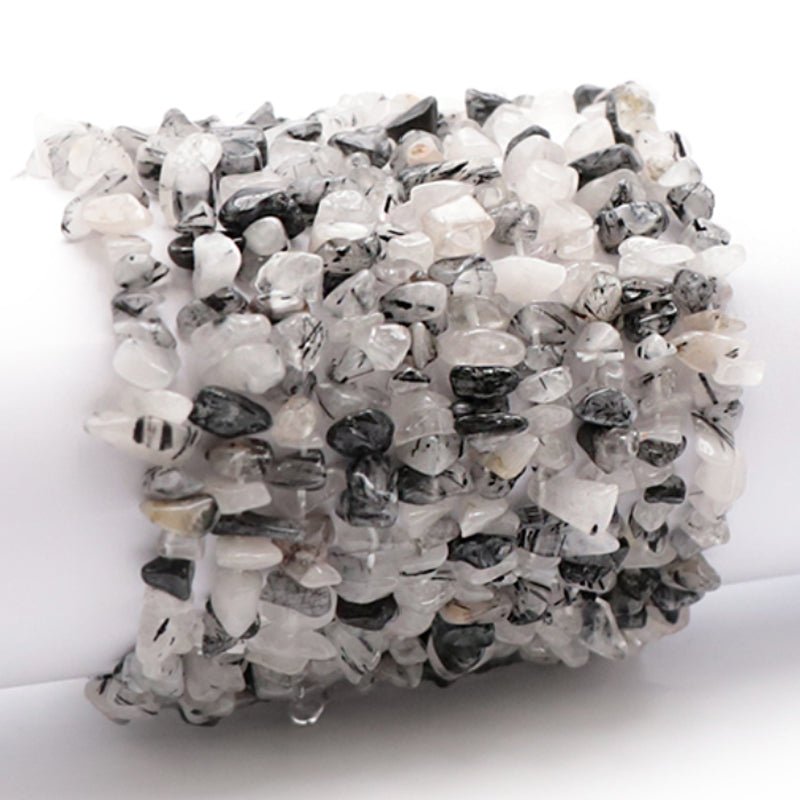
Each stone has a different distribution of inclusions. Some may contain only a few fine needles, while others will be much richer in tourmaline.
The baroque beads have naturally irregular shapes that enhance the raw and authentic look of the bracelet.
With a length of approximately 17 to 18 cm (6.7 to 7.1 inches), this elastic bracelet is suitable for wrists measuring approximately 16 to 18 cm (6.3 to 7.1 inches). Its weight of approximately 10 g (0.35 oz) gives it a nice presence on the wrist.
The shapes, patterns, inclusions, transparencies, and proportions of quartz and tourmaline can vary considerably from one stone to another and from one bracelet to another. Each piece is unique.
Stone: Quartz with tourmaline inclusions
Common name: Tourmalated Quartz
Inclusions: Tourmaline, usually black tourmaline (schorl)
Origin: Brazil
Grade: A – Good quality
Shape: Polished baroque beads
Dimensions: Approximately 17 to 18 cm (6.7 to 7.1 inches)
Recommended wrist size: 16 to 18 cm (6.3 to 7.1 inches)
Weight: Approximately 10 g (0.35 oz)
Mounting: Elastic bracelet
Colors: Colorless, white, translucent, black
Special feature: Natural tourmaline inclusions
In lithotherapy, tourmalated quartz is traditionally considered a stone that combines the symbolism of rock crystal and black tourmaline.
Black tourmaline is traditionally associated with protection and grounding, while quartz is associated with harmonization and amplification.
This association would be particularly valued for symbolically promoting re-centering, stability, and inner balance.
Tourmalated quartz would also be used to help gain perspective on stressful situations and promote a clearer state of mind.
It is traditionally associated with protection against negative energies, grounding, and letting go.
In lithotherapy, black tourmaline is primarily linked to the root chakra, traditionally associated with stability, security, and grounding.
The properties attributed to stones come from lithotherapy traditions and beliefs. They do not replace a diagnosis, treatment, or medical advice.
Tourmalated quartz is a quartz containing tourmaline crystals that formed naturally during its growth.
The most commonly observed inclusions are those of schorl, the black variety of tourmaline.
Quartz and tourmaline are therefore two distinct minerals that are naturally associated within the same stone.
Once the quartz is polished, the tourmaline crystals become particularly visible and sometimes appear to float inside the stone.
During crystal formation, different minerals can develop simultaneously or successively in the same geological environment.
Quartz can thus grow around already present tourmaline crystals and gradually trap them within its structure.
The result is a true natural inclusion: the black needles visible in the quartz are not added after its formation.
This mineral growth explains why each stone has a completely different arrangement of tourmaline.
Tourmaline has a crystalline structure that favors the formation of elongated and prismatic crystals.
When trapped in quartz, these crystals can appear as very fine black lines or thicker rods.
Some inclusions pass through a large part of the stone, while others are much shorter or clustered.
This diversity creates particularly sought-after graphic patterns in jewelry.
The transparent quartz serving as the matrix for tourmalated quartz is chemically in the same family as rock crystal.
The main difference lies in the presence of tourmaline inclusions.
A classic rock crystal is sought after for its transparency and relative absence of visible inclusions, whereas in tourmalated quartz, the black inclusions are precisely the main aesthetic interest of the stone.
Black tourmaline used alone generally appears as an opaque black color.
In tourmalated quartz, tourmaline appears as crystals or needles included in a quartz matrix.
The two materials therefore offer very different appearances, even if black tourmaline is present in both cases.
Tourmalated quartz can sometimes be confused with rutilated quartz because both stones have needle-like inclusions.
The difference lies in the nature of these inclusions.
In tourmalated quartz, they are composed of tourmaline and are generally black.
In rutilated quartz, they are composed of rutile and often appear golden, coppery, red, or sometimes dark.
The appeal of tourmalated quartz largely lies in the diversity of its inclusions.
One stone may contain a single very visible black needle, while another will feature a true network of tourmaline.
The transparency of quartz can also vary from almost transparent to milky white.
These differences are not defects: they are part of the natural formation of the stone.
Baroque beads have irregular shapes, unlike perfectly calibrated round beads.
This finish is particularly well suited to tourmalated quartz as it highlights the inclusions from different angles.
Each bead has its own combination of shape, transparency, and tourmaline inclusions.
The quantity and arrangement of black inclusions can therefore vary greatly from one bracelet to another. The received bracelet may naturally differ from the photographs shown.
Quartz has good hardness and is well suited for jewelry making.
However, it is recommended to avoid significant impacts, particularly due to inclusions and possible natural internal fractures.
Also avoid contact with perfumes, chemicals, and household products.
For routine cleaning, use a soft, slightly damp cloth, then thoroughly dry the stones.
To preserve the elastic thread, preferably remove the bracelet before showering, swimming, or engaging in sports activities.
Discover the characteristics of the stone in our dedicated section here:
https://www.laboiteacailloux.com/collections/quartz-avec-inclusion-de-tourmaline
To learn more about this stone and its properties, visit our page dedicated to rock crystal. You will also find our rock crystal bracelets there.
Color :
Astrological sign:
Stone Type:
Age :
Gender :


Les vertus décrites relèvent de la tradition de la lithothérapie et ne constituent ni un avis médical ni un conseil de santé. En cas de problème de santé, consultez un professionnel.