Collection: Pink tourmaline

The name tourmaline comes from “turmali” or “turamali” which is actually a Sinhalese name given to this fabulous stone from Sri Lanka by Dutch explorers at the beginning of the 18th century.

In Sri Lanka, legend has it that tourmaline comes from the sky and, as it descends to earth, passes through a rainbow that gives it its color variations. This explains the origin of its name, which means “the stone of a thousand colors.”

In fact, tourmaline has been known for thousands of years. Traces of this stone were found in the 3rd century BC. In Greece, it was Alexander the Great (356-323 BC) who brought this stone back from his expeditions. However, tourmaline, due to its many colors, has very often been confused with other minerals.

Thus, there are very few legends or myths attached to this stone due to its late identification. However, some tourmalines have piezoelectric properties, which means they have an electrical charge, negative at one pole and positive at the other pole. Tourmaline attracts particles to itself.

When the philosopher Theophrastus (-322 to -288) described a stone that had the ability to attract pieces of straw or wood, we understand that he was talking about tourmaline. Later in the 18th century, Dutch explorers used tourmaline to clean their pipes, because the stone attracted ashes.

As an anecdote, in the 16th century, a Spanish conquistador discovered a green tourmaline in Brazil, which he identified as an emerald. This discovery caused a rush in the Brazilian regions in search of these famous emeralds. The error was corrected in the 19th century and the emeralds transformed into tourmalines.

Often mistaken for precious stones, tourmalines are found in many pieces of jewelry, even in the British crown. Other examples include the Timur Ruby, a 352-carat jewel that was thought to be a ruby ​​until 1851, or the 170-carat Black Prince Ruby, which is actually a tourmaline.

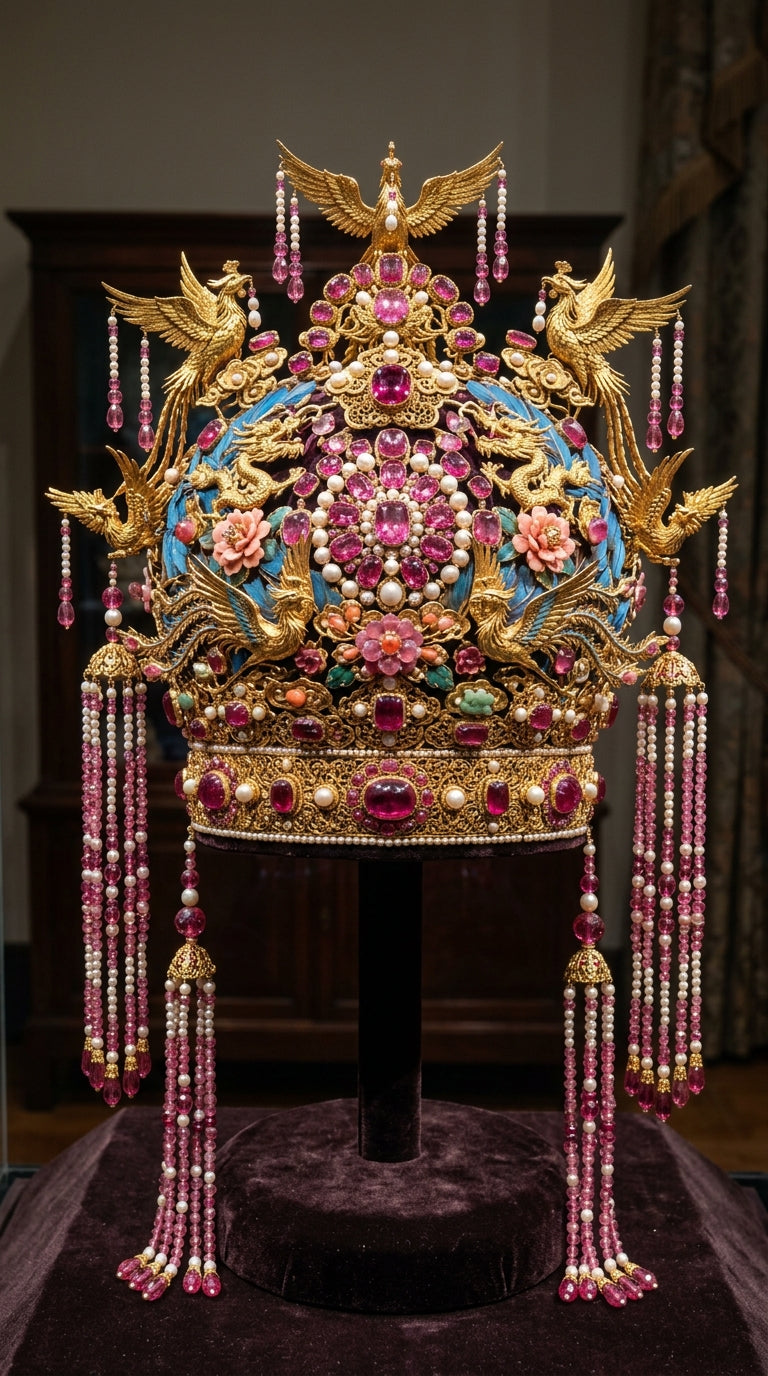
Tourmaline is attracting increasing interest from connoisseurs and collectors. The Chinese Empress Cixi (1861-1908) was so fond of this stone that she began collecting it. She commissioned sculptures, brooches, watch clasps, rings, and other items to be made from it. Today, she rests on a cushion of tourmalines.

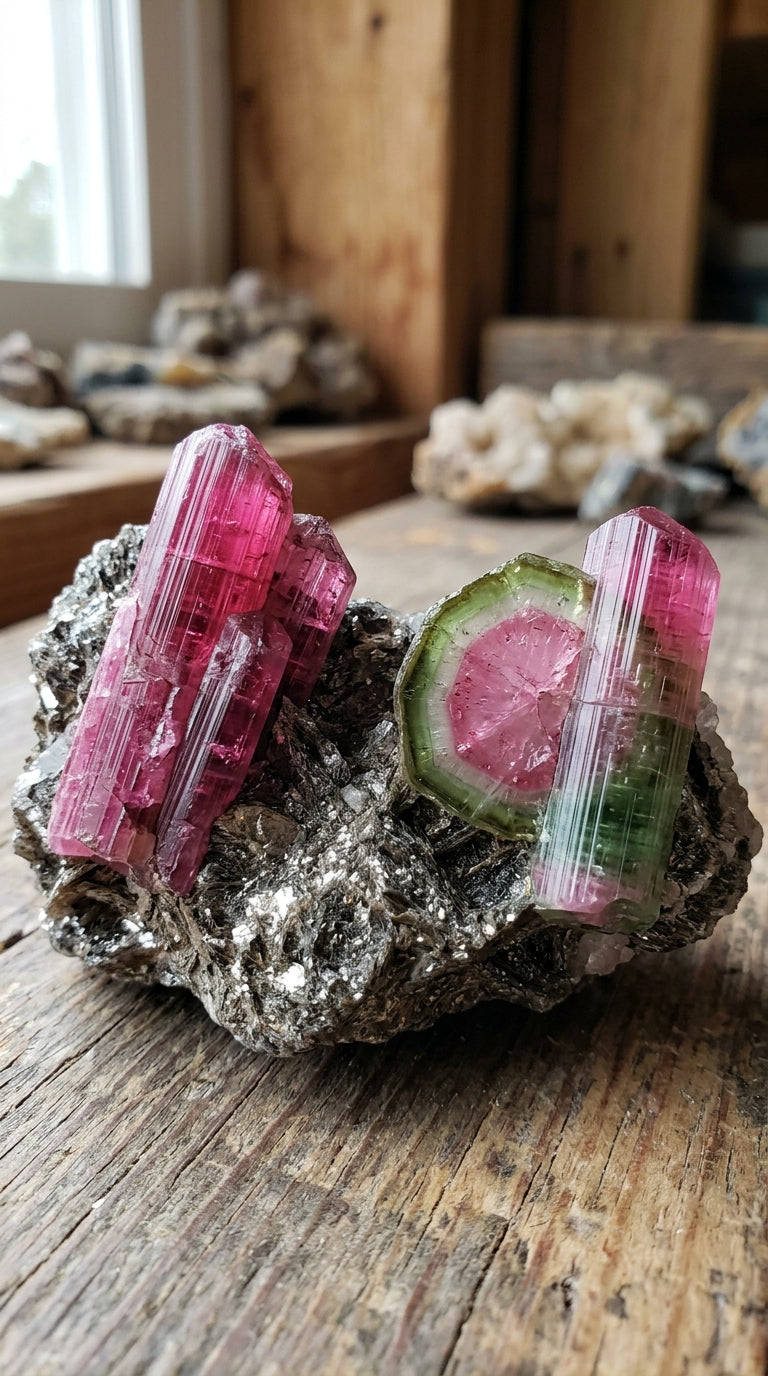
Tourmaline comes in various shades. They can also be bi-colored or multicolored. There is a wide variety of tourmalines, ranging from opaque to transparent, with striated or hexagonal structures. It has a rhombohedral crystal system. It is an igneous and metamorphic rock that can originate from hydrothermal deposits.

Thus, there are several types of tourmalines with varied compositions such as magnesium silicates, sodium silicates, iron silicates, clay silicates, fluorides, and borosilicate silicates. Tourmalines are actually a whole family of stones, which have the same internal structure, but differ in chemical composition and therefore in color and appearance.

The main deposits are located in Brazil, Afghanistan, Australia, Brazil, Russia, Thailand, Burma, Madagascar, India, and the United States.

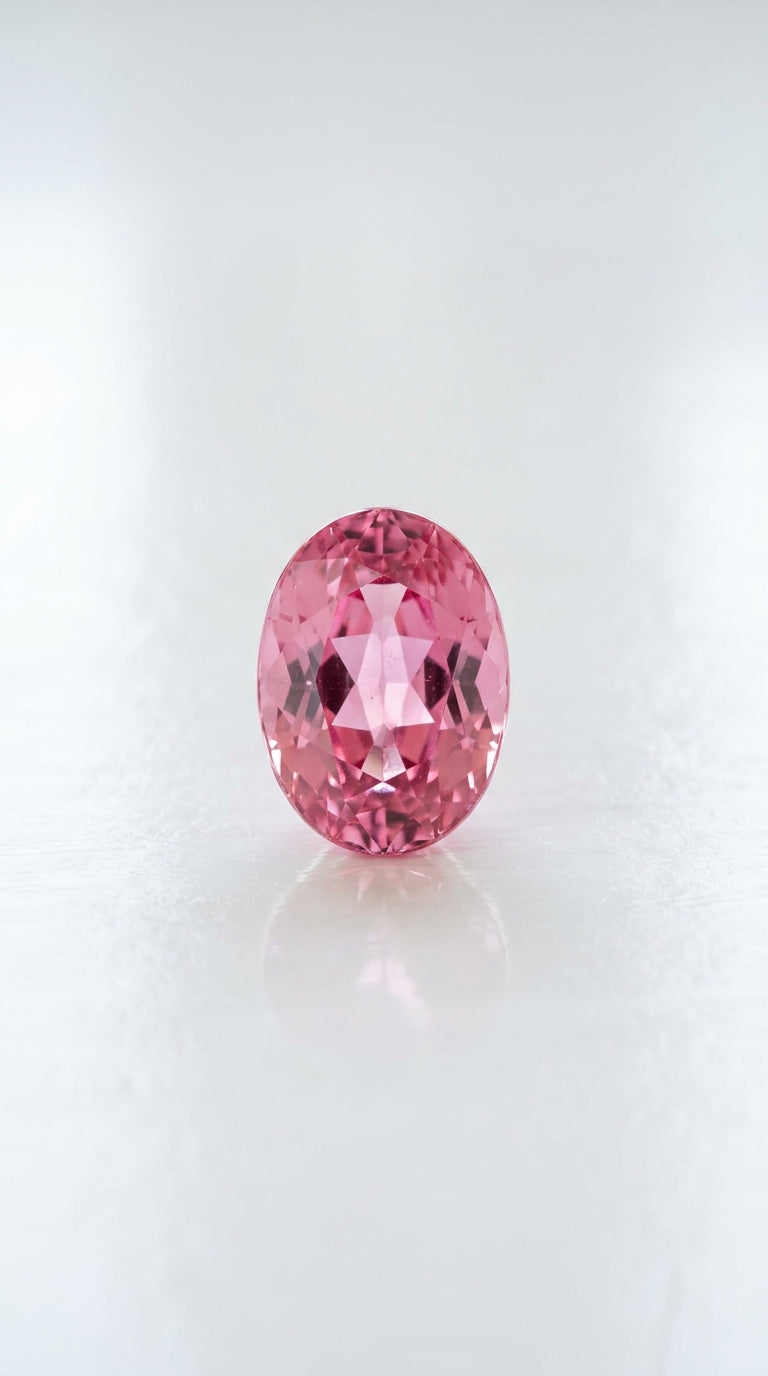
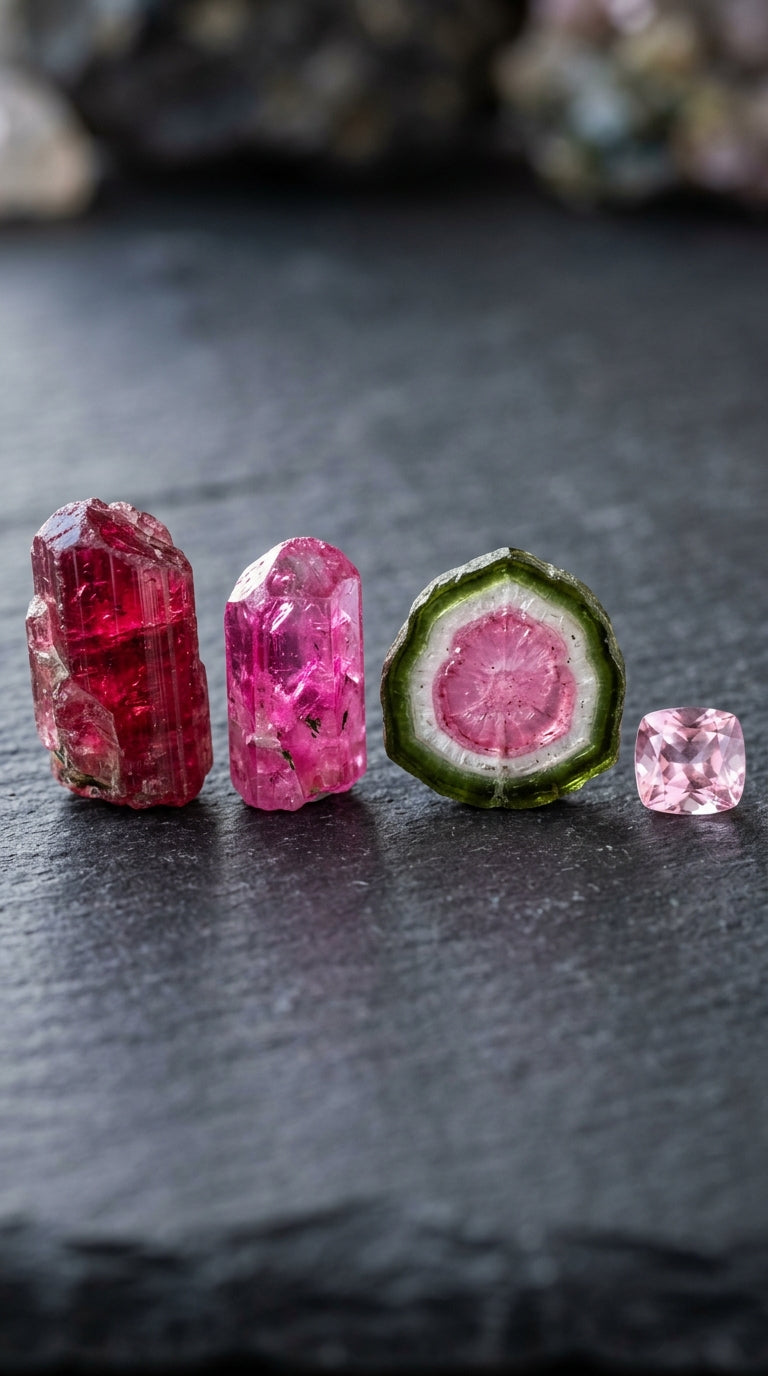
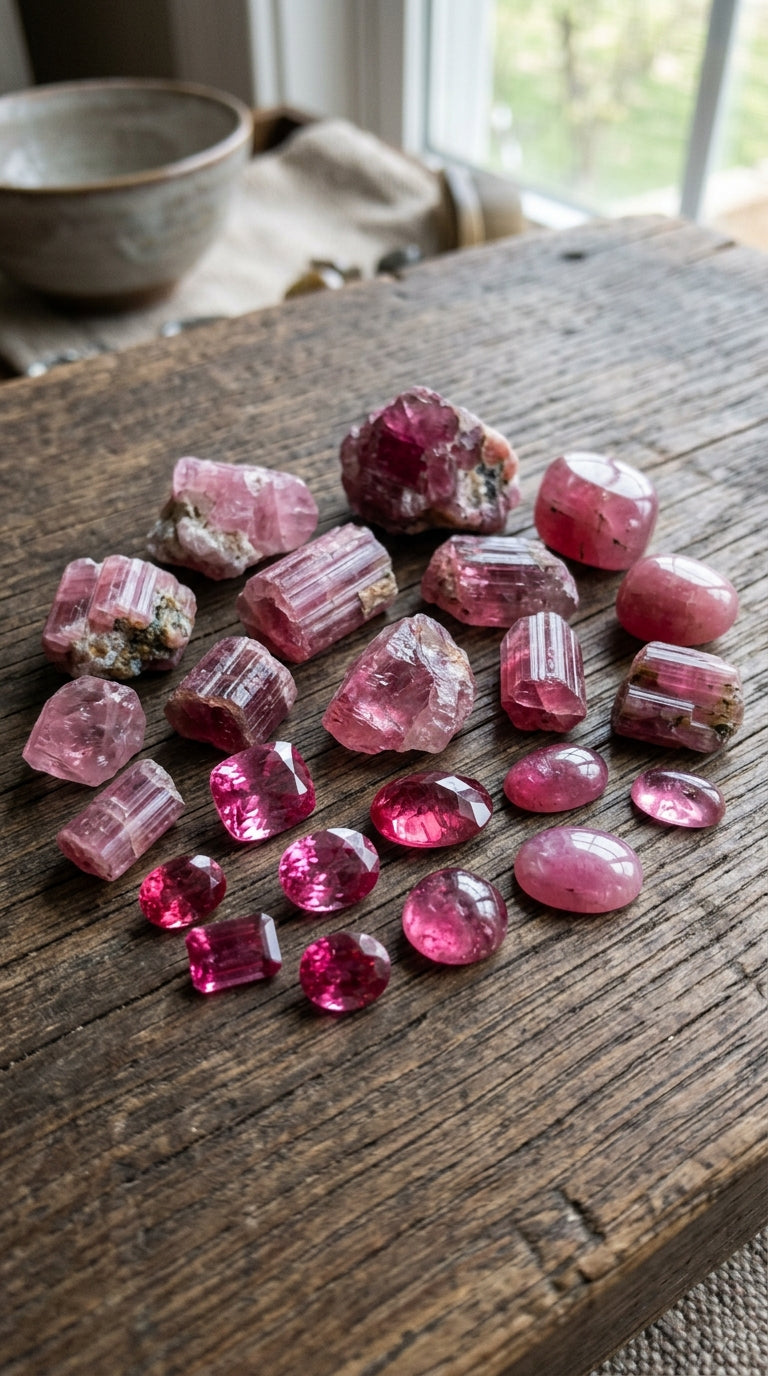
Pink tourmaline / pink tourmaline gem rubellite

The tourmaline family has many varieties identified by their own name or by color. For example, pink tourmaline is also called “rubellite” because of its strong resemblance to ruby. The name rubellite comes from the Latin “rubellus” meaning “reddish.” Incidentally, in 17th-century Russia, a crown was adorned with pink tourmalines that had been mistaken for rubies.

Belonging to the tourmaline family, pink tourmaline or rubellite is composed of complex silicates of borosilicates, iron, alkalis, and magnesium. It also contains a high content of copper and manganese, which gives it this magnificent pink color. Pink tourmaline can be transparent, translucent, or even opaque. It should be noted that its color can change depending on the angle from which the stone is viewed.

Rubellite sometimes has a color close to red, hence its confusion with ruby. In pink tones, we find dravite (light mahogany) and silerite (lilac-pink to blue-violet). Pink tourmaline has a hardness of 7 to 7.5 on the Mohs scale. For comparison, diamond has a hardness of 10, the highest on this same scale. This hardness is particularly appreciated by jewelers in the creation of their jewelry.

Pink tourmaline or rubellite was relatively affordable in terms of cost. However, as demand increased considerably, so did the prices!

The main deposits are located in Namibia, etc.

Pink tourmaline is closely linked to feelings of love and tenderness. It emits vibrations that help restore and protect psychological well-being. It promotes introspection and reconnection with one's inner self. Thus, it helps identify the nature of buried traumas, often linked to childhood and lack of love. The person can then work on these traumas and move forward. They will be able to achieve the goals they have set for themselves.

Thus, this stone restores self-esteem and confidence. It provides serenity, harmony, and inner peace. It engenders trust in others, allowing one to develop new relationships without suspicion. It demonstrates compassion and empathy. The person sincerely seeks to help others in need. Then, this fabulous stone teaches the person to love themselves as they are.

Pink tourmaline is known to soothe pain and sorrow. It helps overcome life's difficulties and negative thoughts. It frees its wearer from anxiety, anguish, and pathological shyness. Furthermore, it allows the wearer to become aware of their own positive qualities. It also brings a sense of security when the wearer feels vulnerable. It encourages conflict resolution, regardless of the nature.

Sort by

6 products

Filter and sort Filter
Filter and sort
Filter

6 products

Availability
Price
Product type
Color
Stones
Stone Type
Astrological Sign
Diameter Beads
Gender
Age range

6 products