


Couldn't load pickup availability
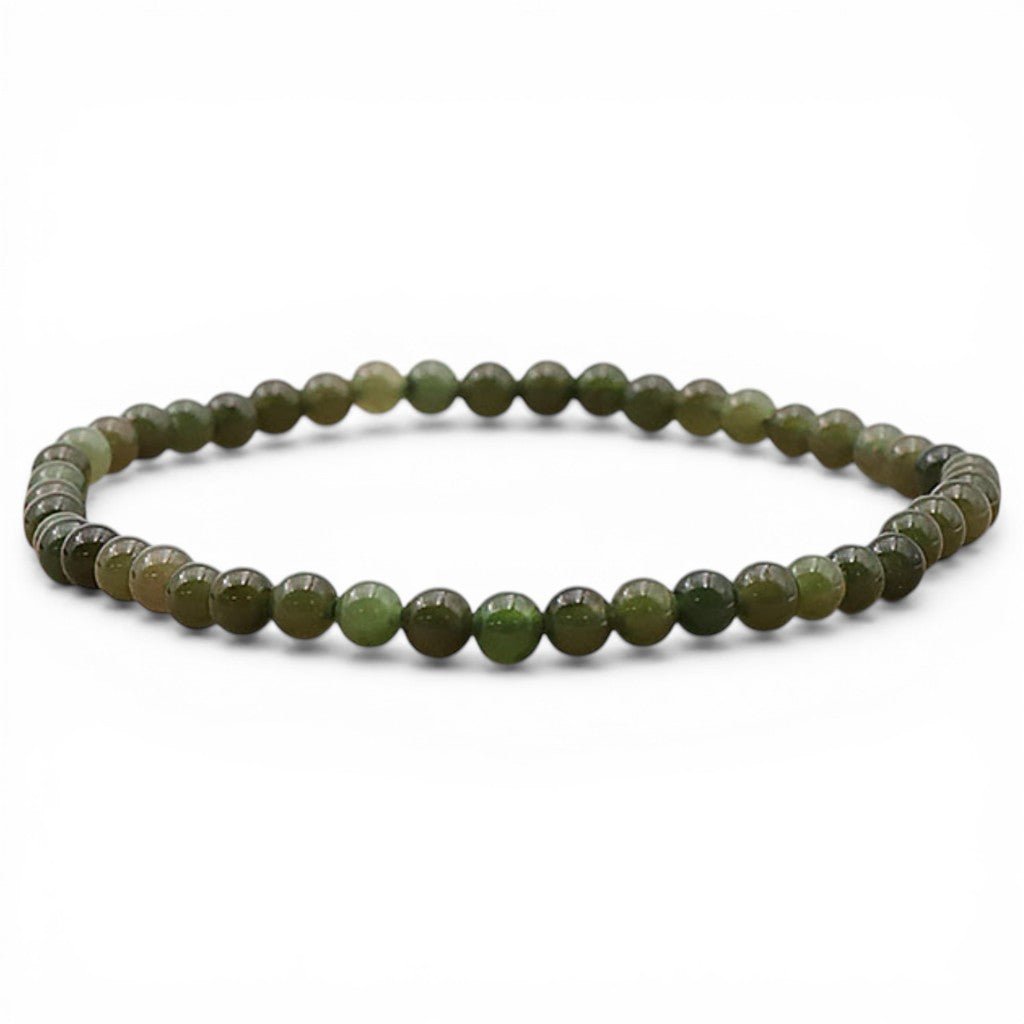
BRA-JADV-15
Origin: Canada
Grade: A
Jade is not a precious stone, but it has been adored, used, and carved by multiple civilizations for about eight millennia.
For many years, jade was considered a single stone. However, in 1863, Alexis Damour (1808-1902), a French mineralogist, differentiated three types of minerals under the name jade and dissociated them. These three minerals have distinct characteristics.
The first of these minerals is called jadeite. It belongs to the silicate family and more specifically to the pyroxene group (minerals from the inosilicate group, components of magmatic and metamorphic rocks). It is the most precious, densest, and rarest jade.
Its color is generally white or gray. It is rather transparent in appearance. Its shades and opacity differ depending on the inclusions it possesses. The most common color is green, more or less dark. It varies according to its titanium, manganese, or chromium content. However, jadeite can also be pink, orange, or purple. It has the highest hardness among jades, ranging between 6 and 7 on the Mohs scale.
The second of these minerals is nephrite. Nephrite is found in greater quantities than jadeite. It is essentially composed of basic magnesium silicate, calcium with the presence of ferric iron. Nephrite can be translucent, white or very slightly yellow, opaque, brown or gray to green, and can present all shades of green.
More specifically, nephrite is a rock composed of amphibole (iron and magnesium silicate) of green, black, or brown color, or actinote (a ferromagnesian mineral from the silicate family). It has a hardness of 6 to 6.5 on the Mohs scale. It is less hard than jadeite, but it still allows for the manufacture of tools, jewelry, or ornamental objects.
The third of these minerals is kosmochlor, which is the rarest of jades. It has a composition similar to jadeite and belongs to the silicate family and the pyroxene group. Depending on its impurity content and their nature, it has an emerald green hue, more or less intense. It can have traces of titanium, aluminum, iron, manganese, calcium, potassium, and phosphorus.
Kosmochlor comes from the site where a meteorite fell in Toluca, Mexico. This jade comes from space. Furthermore, its name comes from the German "kosmische" meaning cosmic. "Chlor" comes from the Greek "khlôros" which refers to the color green.
It was the Portuguese who brought jade back at the end of the 15th century. Indeed, they had settled in Canton, China. This mineral was then called "piedra de ijada," meaning "loin stone." This name illustrates the healing power of this stone on kidney pains, or nephritic pains.
In some Latin texts, the name lapis nephreticus refers to jade. The French discovered this stone in the 17th century and named it "éjade." Subsequently, the "e" disappeared and the mineral became jade.
Jade objects dating back approximately 5,000 years have been found. Jade then became a sacred stone during Chinese prehistory. Deceased members of the elite were buried with jade. Jade represented absolute power, and Chinese emperors carried a jade scepter during important ceremonies.
The Greeks possessed jade from birth to death. They also used it to soothe and heal their wounds. In New Zealand, the Maoris made tools, weapons, and jewelry from jade.
The main deposits of jade are located in Canada, Thailand, China, Russia, and the United States.
Nephrite jade is a stone of balance and energy. It balances our emotions by allowing us to release buried anxieties. This brings appeasement, calm, and a feeling of lightness.
Indeed, it generates self-confidence and a certain benevolence towards oneself. It helps to detach from accumulated traumas and makes way for the positive emotions that surround us. It helps to find inner peace. Once the mind is free, tranquility sets in.
Nephrite jade is strongly recommended for people who are weakened, overly nervous, and easily exhausted. It is a stone of energy that restores vitality. It frees the mind from guilt and helps to distance oneself from the judgment of others. It gives wisdom and facilitates openness towards others without prejudice.
This mineral improves the body's endurance and diffuses serenity. It is ideal for meditation and promotes introspection. Nephrite jade is said to be a stone of honesty towards oneself and others. It helps to know oneself better and to have a better understanding of oneself.
In case of a breakup or the loss of a loved one, wearing nephrite jade gives the strength to overcome wounds and moral suffering. It stabilizes emotions and calms pain. Nephrite jade allows one to move forward after difficult trials.
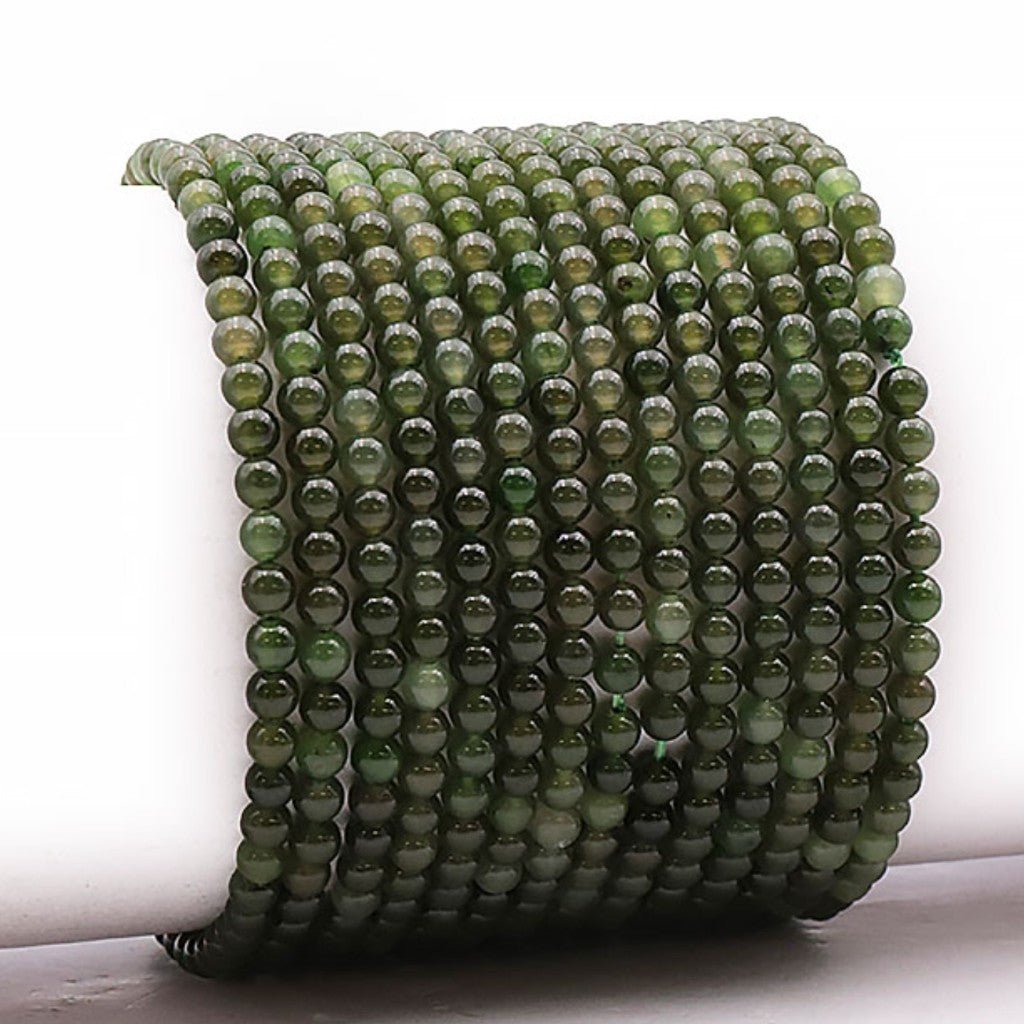
This model is made from natural jade, selected for its quality. Explore our entire range of jade bracelets.
Color :
Astrological sign:
Stone Type:
Age :
Gender :


The properties described come from the tradition of crystal healing and are neither medical advice nor health advice. For any health problem, consult a professional.