



Couldn't load pickup availability
BRA-PDL-55
Origin: India
Grade: A
Dimensions:
Approximately 17-18cm - Suitable for all wrists from 16 to 18cm
Weight:
Approximately 10g
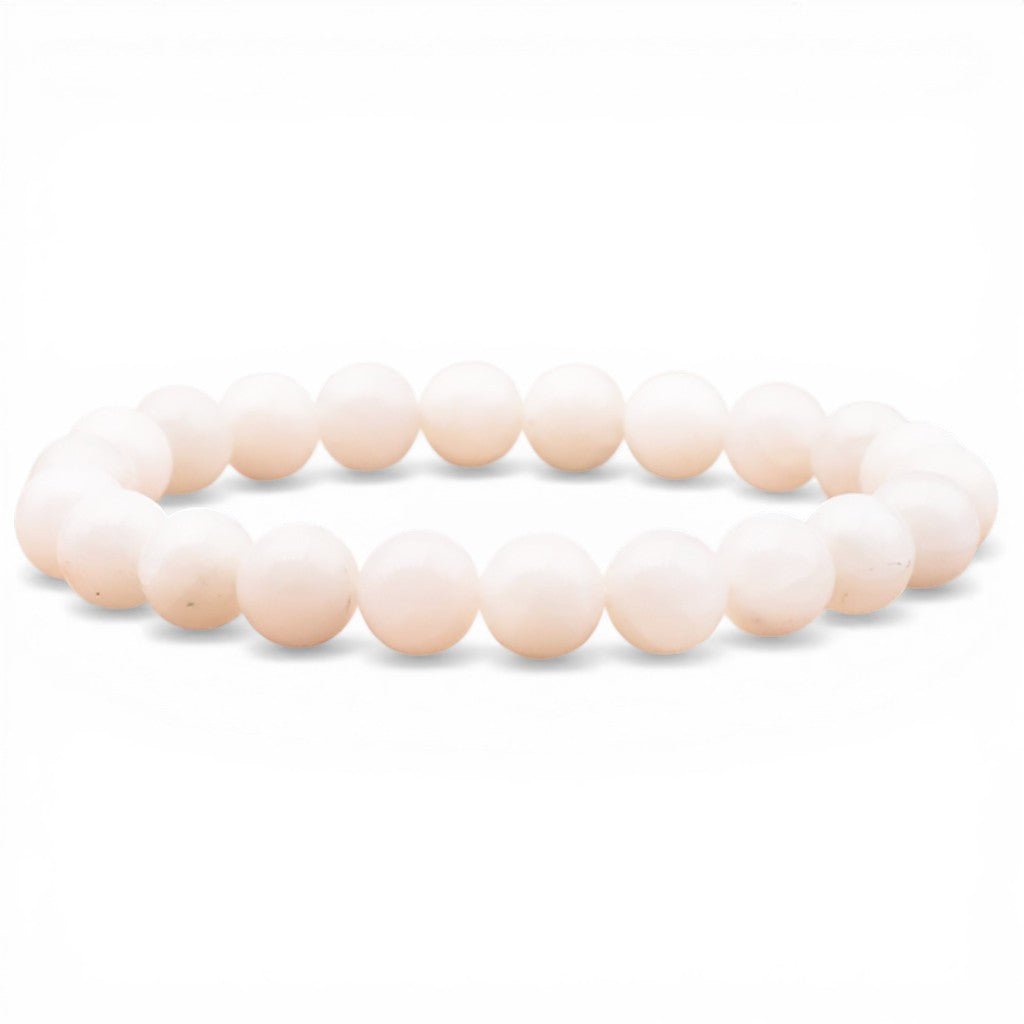
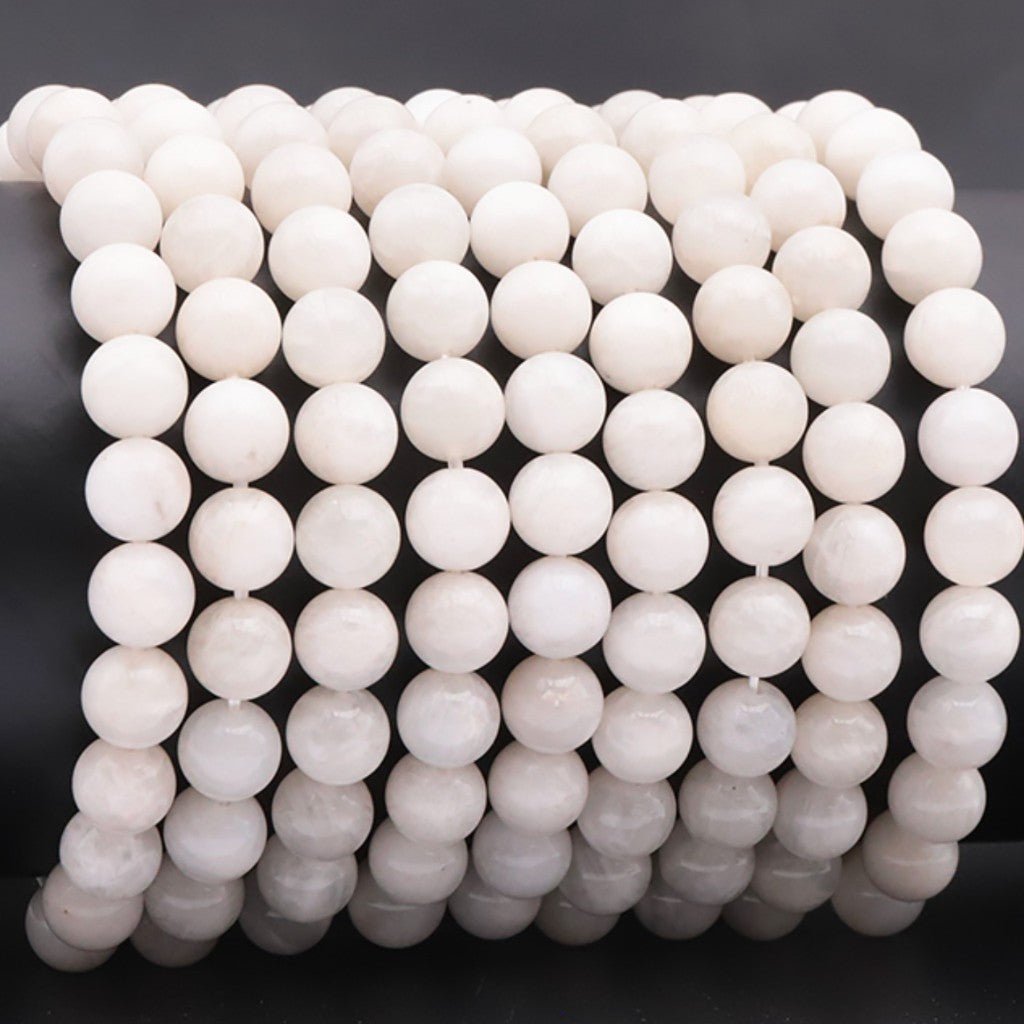
Elastic bracelet made of 5-6mm beige moonstone beads.
Colors and patterns may vary from one stone to another.
The origin of the name moonstone comes from distant civilizations that named stones based on their natural appearance or physical characteristics.
Moonstone was named for its striking resemblance to the moon. This stone has a soft color with pearly reflections similar to those of the moon.
In ancient times, there was a belief that moonstone was actually pieces of solidified moon that arrived on Earth. However, this name moonstone is a purely commercial designation.
The scientific name for this stone is adularia. Indeed, during the 18th century, a significant deposit of this adularia stone was found on Mount Adula, located on the border between Switzerland and Italy. Nowadays, this deposit is unfortunately exhausted.
Moonstone is also called Hecatolite in honor of Hecate, goddess of the Moon in Greek mythology.
No matter what name is given to this stone, it maintains a close connection with the moon, which gives it many virtues.
Regardless of civilizations, the Moon and the Sun have always fascinated our ancestors. They attributed a celestial power to moonstones.
It has been shown that lunar cycles play an important role on the environment, on Earth, and on the seas. They also influence people's moods, notably causing sleep disturbances.
In antiquity, the Greeks adored moonstone, which they named hecatolite stone after Hecate, their goddess of the moon. They gave her many offerings hoping to receive the power of clairvoyance and protection. This stone was a symbol of fertility and passion. Worn by pregnant women, this stone protected their pregnancy.
In ancient Rome, femininity and the gift of clairvoyance were associated with moonstone. At the same time, this stone represented Diana, goddess of the moon and animals. It had the power to change friendly feelings into loving feelings. It also protected couples.
Indians were convinced that moonstone was a stone that had absorbed many lunar rays. There is another version that explains that moonstone is actually a fragment of the moon that fell to Earth. Nowadays, in India, this pearly stone is still sacred.
In the Middle Ages, this moonstone was very popular with women who attributed to it the power to increase fertility and maintain passion. Subsequently, this stone protected the pregnant woman and her fetus during pregnancy.
In Egypt, night travelers wore a moonstone pendant to protect them from possible attacks and to fight against evil spirits.
In 1970, moonstone became the official emblem of Florida in honor of the Kennedy Space Center, the launch site of the Apollo 11 rocket for the first time to the moon in 1969.
The stone is a mineral that belongs to the silicate group and is part of the feldspar family. Its hardness is 6 to 6.5 on the Mohs scale, which makes it a perfect stone for jewelry making. This mineral has different colors, beige, pink, grey, black, with this pearly appearance and the phenomenon of adularescence (shimmering below the surface of the stone with reflection of light between its layers).
The main deposits are located in India, Madagascar, Australia, China, the United States, Sri Lanka, etc.
Beige to slightly orange moonstone generally comes from deposits located in India. It has a cloudy texture on a beige-brown background. This variety of translucent potash feldspar can even go up to a vibrant orange.
Beige moonstone is most often found in cabochon form. Less famous than white moonstone with blue reflections, it is nevertheless appreciated for the softness it releases.
Beige moonstone exudes softness and inspires feelings of peace. It acts on the nervous system and dissipates negative feelings such as anxiety and anguish. It soothes its wearer and reduces psychic or psychological disorders. It thus allows access to a state of calm and serenity.
Wearing a beige moonstone is excellent for a couple. It strengthens feelings of love and passion. It helps maintain quality intimate relationships. Moreover, it reduces disputes and restores communication. It promotes understanding and contributes to marital happiness.
This particular mineral develops sensitivity, creativity, and imagination. It also strengthens extrasensory abilities such as intuition and clairvoyance. It gives the ability to distinguish sincere people from hypocritical people.
Furthermore, beige moonstone worn on the first day of school or the first day in a new company facilitates beginnings, develops communication and exchanges. The wearer of this stone is guided to meet others. They have an altruistic spirit and enjoy contact with people.
This piece is cut from moonstone, a stone with fascinating properties. Browse our collection of moonstone bracelets to find the model that suits you.
Color :
Astrological sign:
Stone Type:
Age :
Gender :


The properties described come from the tradition of crystal healing and are neither medical advice nor health advice. For any health problem, consult a professional.