




Couldn't load pickup availability
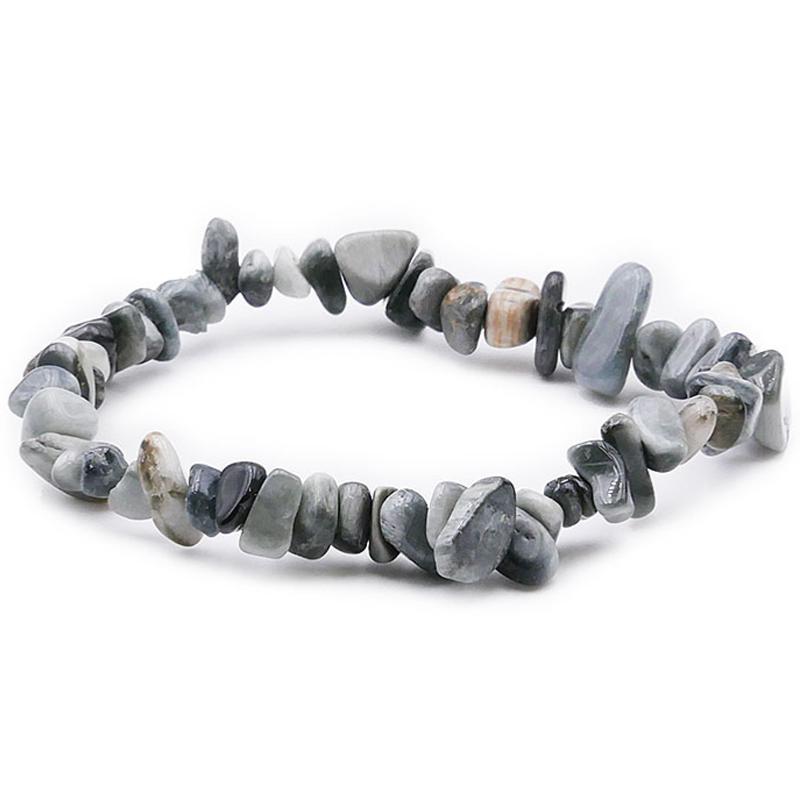
Beautiful South African A-grade cat's eye tourmaline bracelet, made of natural baroque beads with varying shades that can mix green, grey, brown, black, and lighter tones.
Some stones may display a luminous effect resembling a cat's eye, an optical phenomenon called chatoyancy. Combined with the irregular shapes of the baroque beads, this effect gives the bracelet an original and naturally unique character.
This A-grade South African cat's eye tourmaline bracelet - good quality is made of polished natural baroque-shaped stones.
Tourmaline belongs to a complex group of minerals known for its extraordinary diversity of colors. Some crystals contain inclusions or internal structures sufficiently oriented to produce, after polishing, an optical phenomenon called chatoyancy.
When conditions are met, a luminous band can appear and move across the surface of the stone when it moves under a light source. This phenomenon recalls a cat's vertical pupil, hence the name "cat's eye".
On baroque beads, the intensity of this effect can naturally vary greatly. Some stones may show a clearly visible chatoyancy while others will show a much more subtle reflection.
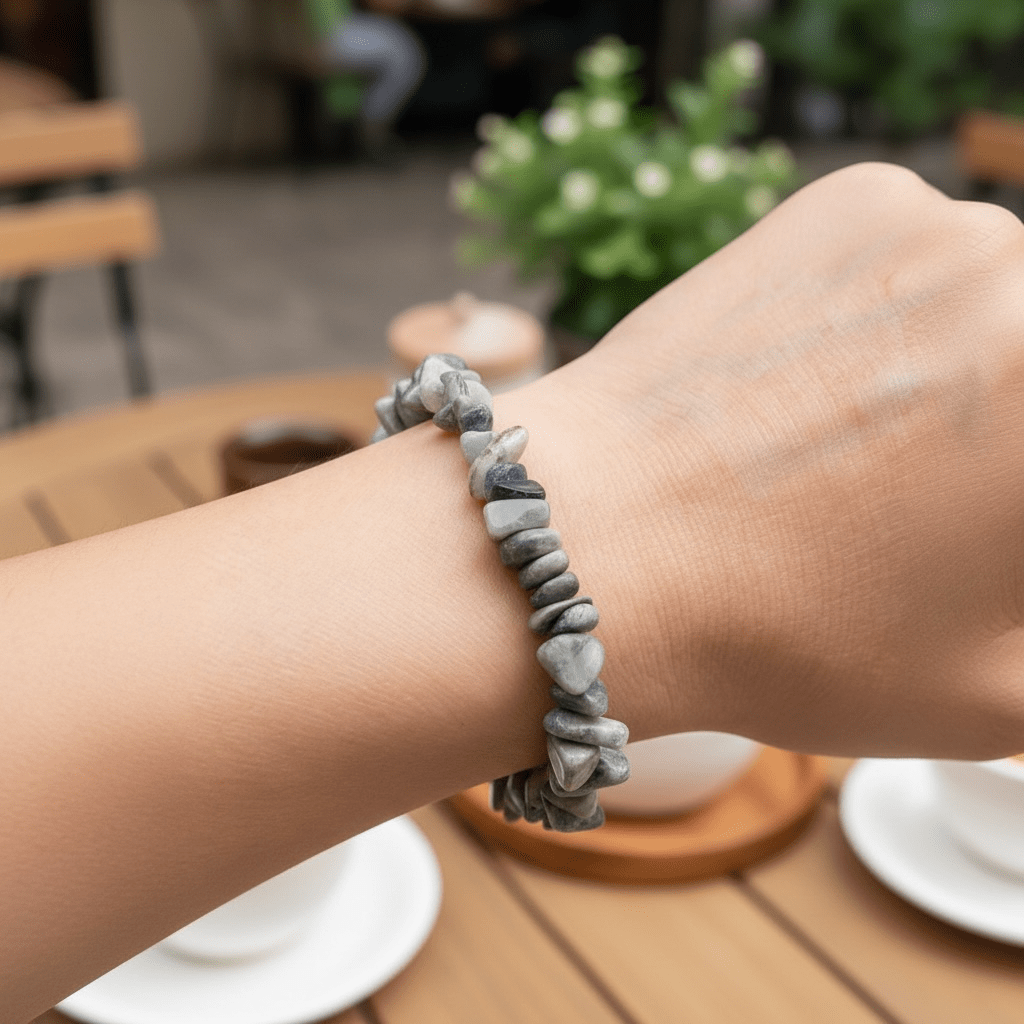
With a length of approximately 17 to 18 cm, this elastic bracelet is suitable for wrists measuring approximately 16 to 18 cm. Its light weight of approximately 7 g allows it to be worn comfortably daily.
Colors, patterns, inclusions, shapes, and intensities of the cat's eye effect may vary from one stone to another and from one bracelet to another. Each item is unique.
Stone: Cat's Eye Tourmaline
Mineral Group: Tourmalines
Origin: South Africa
Grade: A – Good quality
Shape: Polished baroque beads
Dimensions: Approximately 17 to 18 cm
Recommended Wrist Size: 16 to 18 cm
Weight: Approximately 7 g
Mounting: Elastic bracelet
Colors: Variable depending on the stones
Hardness: Approximately 7 to 7.5 on the Mohs scale
Optical Phenomenon: Chatoyancy variable depending on the stones
Special Feature: Luminous reflection that can resemble a cat's eye
In lithotherapy, cat's eye tourmaline is traditionally associated with protection, grounding, and intuition.
Like other tourmalines, it is said to be appreciated for symbolically promoting balance and stability, particularly during periods of change or stress.
The cat's eye effect also gives it a particular symbolism linked to vigilance, discernment, and intuition.
It would thus be traditionally used to help take a step back from a situation and better perceive one's surroundings.
Depending on its dominant color, it can also be associated with different properties: dark tones are more related to grounding and protection, while green tourmalines are traditionally associated with emotional balance and the heart chakra.
The properties attributed to stones are derived from lithotherapy traditions and beliefs. They do not replace a diagnosis, treatment, or medical advice.
Cat's eye tourmaline is not a distinct mineral species.
It is a tourmaline exhibiting a particular optical phenomenon called chatoyancy.
This phenomenon can be caused by the presence of numerous parallel inclusions or internal structures that reflect light in an organized manner.
When the stone is properly oriented and polished, light concentrates in the form of a lighter band on its surface.
Chatoyancy is an optical phenomenon found in various natural stones.
Under a sufficiently directional light source, a luminous line or band appears to slide across the stone's surface when it is moved.
The effect evokes the vertical, luminous pupil of a cat's eye.
It is particularly spectacular on cabochon-cut stones, as their domed surface further concentrates the phenomenon.
On baroque beads, the effect may be more irregular and appear only in certain areas or under certain angles.
No, and this precision is particularly important for this type of bracelet.
The visibility of chatoyancy depends on several factors: orientation of inclusions, shape of the stone, quality of polishing, observation angle, and direction of light.
A stone may show a spectacular reflection under direct light and almost no effect under diffuse lighting.
On a bracelet composed of many small, differently oriented baroque stones, it is therefore perfectly normal for some beads to exhibit the cat's eye effect more than others.
To better observe chatoyancy, place the bracelet under a point light source, then slowly rotate it.
An LED lamp or direct sunlight generally makes reflections stand out better than diffuse lighting.
On some stones, you can then observe a band or a luminous reflection that appears to move across the surface of the bead.
Tourmaline can contain parallel inclusions, fine tubes, or various oriented internal structures.
When these elements are numerous enough and correctly arranged, they reflect light in a particular direction.
The polishing of the stone then reveals this effect.
It is therefore a natural phenomenon linked to the internal structure of the stone, and not a color applied to its surface.
Despite the use of the term "eye," cat's eye tourmaline and tiger's eye are two completely different materials.
Tiger's eye is a variety of fibrous quartz exhibiting characteristic chatoyancy and colors typically golden brown to yellowish brown.
Cat's eye tourmaline belongs to the tourmaline group and can display very different colors.
Both stones can therefore produce a movable luminous effect, but their mineralogical composition and formation are different.
The term "cat's eye" can also refer to several chatoyant gemstones.
In gemology, when the appellation cat's-eye is used simply in certain contexts, it is historically very strongly associated with cat's eye chrysoberyl, also called cymophane.
A tourmaline exhibiting the same type of phenomenon should therefore ideally be fully designated as "cat's eye tourmaline" to avoid any confusion.
Black tourmaline, generally called schorl, is mainly characterized by its black color and its richness in iron.
Cat's eye tourmaline, on the other hand, is commercially defined by the presence of a chatoyant effect.
A dark tourmaline may eventually exhibit this effect if its internal structure is suitable, but not all black tourmalines are obviously cat's eye tourmalines.
The tourmaline group is remarkable for its immense chromatic diversity.
Depending on their composition, tourmalines can be black, brown, green, pink, red, blue, yellow, or multicolored.
On a cat's eye tourmaline bracelet, the color can therefore vary from one bead to another depending on the selected material.
This diversity contributes to the natural character of the jewelry.
This bracelet is offered in grade A – good quality.
The stones may therefore show variations in color, transparency, inclusions, and intensity of chatoyancy.
Some beads may reveal a relatively strong cat's eye effect while others will only show a slight reflection.
These differences are natural and particularly normal for baroque-shaped stones.
Commercial classifications A, A+, AA, or AAA do not correspond to a standardized international gemological scale. They primarily serve to differentiate several levels of selection from a supplier or seller.
Baroque beads have irregular shapes, unlike perfectly round and calibrated beads.
This finish gives the bracelet an authentic look and allows each stone to retain a different shape.
It also influences how light reflects on the tourmalines.
Thus, colors, shapes, inclusions, and luminous effects may vary significantly from the photographs presented. Each bracelet is unique.
With a hardness of approximately 7 to 7.5 on the Mohs scale, tourmaline has good resistance for use in jewelry.
However, it must be protected from significant impacts and sudden changes in temperature.
Also avoid contact with chemicals, perfumes, cosmetics, and household products.
For routine cleaning, simply use a soft, slightly damp cloth, then carefully dry the stones.
To also preserve the elastic thread, preferably remove your bracelet before showering, swimming, cleaning, or sports activities.
A natural stone with recognized virtues in lithotherapy, black tourmaline gently accompanies daily life. Discover all our black tourmaline bracelets.
Color :
Astrological sign:
Stone Type:
Age :
Gender :


Les vertus décrites relèvent de la tradition de la lithothérapie et ne constituent ni un avis médical ni un conseil de santé. En cas de problème de santé, consultez un professionnel.