



Couldn't load pickup availability
OBSA-B-01
Origin: Mexico
Grade: A
Dimensions:
About 30-40mm
Weight:
Between 10 and 20g
Origin:
Mexico
Grade:
A = good
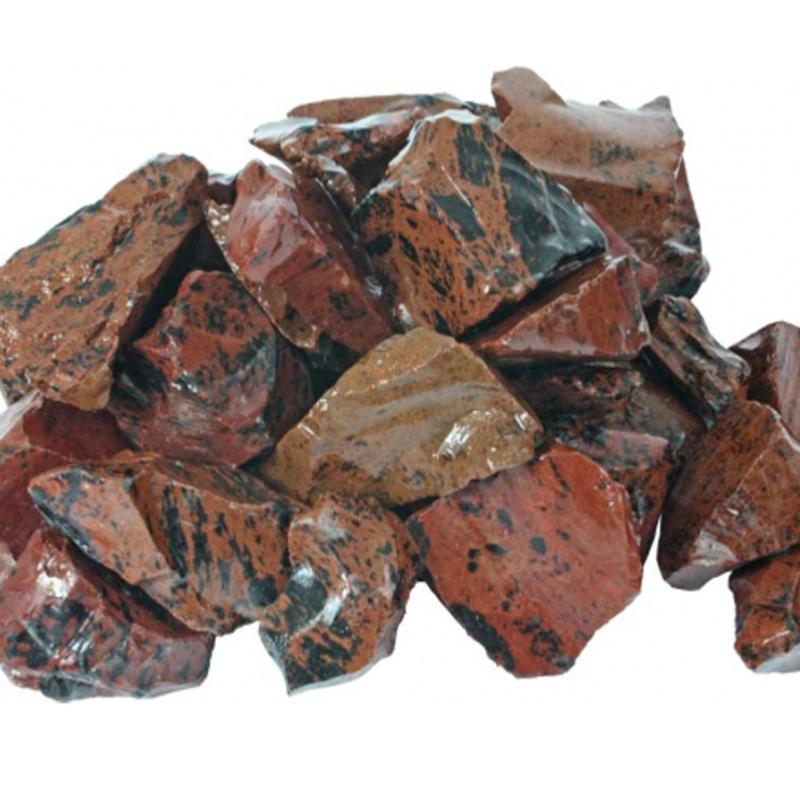
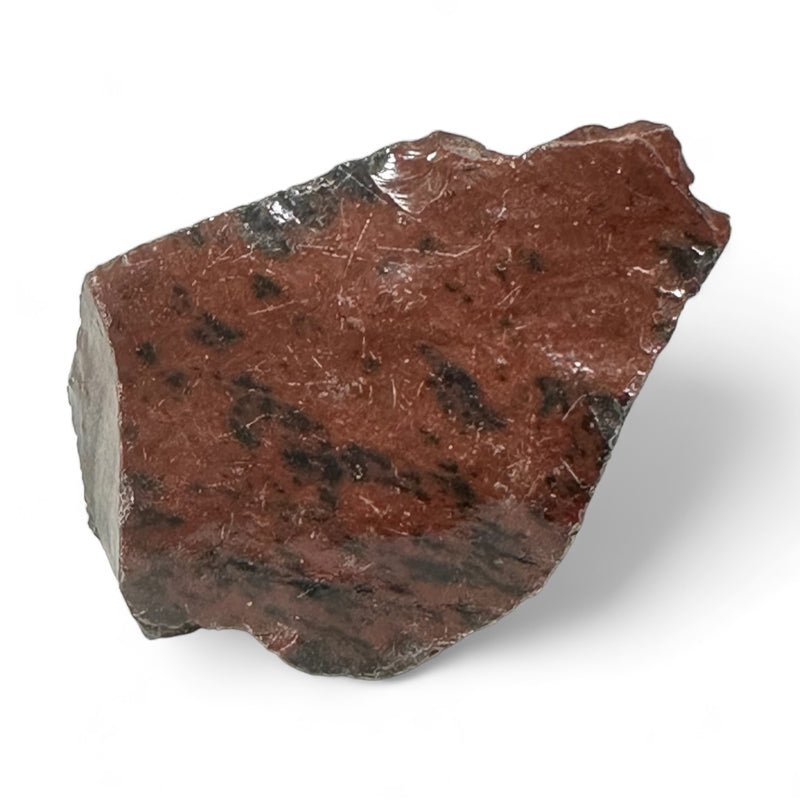
Mahogany obsidian from Mexico, approximately 30-40mm
Sold individually.
Colors and shapes may vary from stone to stone.
Obsidian is a silica-rich volcanic rock. Different types of obsidian exist, differing due to the rock's chemical composition. Obsidian is actually a natural glass. It forms during an eruption of silica-rich lava with less than 3% water. Upon exiting the volcano, it cools very rapidly, freezing the crystallization process.
This can be compared to a piece of lava suddenly solidifying as it emerges from a volcano. The direct consequence of this phenomenon is the inability of the rock to crystallize. The result is the creation of a volcanic glass with a uniform texture, which is referred to as an amorphous mineral. Furthermore, obsidian has sharp edges and very fine blades. It is a natural mineral with a complex composition.
Thus, obsidian is essentially composed of silicon dioxide, about 70% or more. Its fracture is conchoidal (i.e., furrowed with curved and concentric striations) and its hardness is 7 to 7.5 on the Mohs scale. It has different colors and different reflections due to the volcano where it was discovered and its various inclusions. It should be noted that each deposit, linked to a volcano, provides a different obsidian.
Green, brown, gray or black, it can sometimes have reflections of gold, silver, or even all the colors of the rainbow, (effect produced by the presence of hematites or magnesite). It also happens that two colors of obsidian mix.
Traces of obsidian are found in some sharp objects dating back approximately 2 to 4 million years, particularly in Kenya. Archaeological excavations have discovered knives, arrows, and spears. Sometimes, depending on its composition, obsidian can be polished to make rustic mirrors.
As early as 7,000 BC, obsidian was widely used in surgery due to its cutting properties. Evidence of trepanation, the removal of a portion of the skull bone either to clean a wound or to attract spirits, has been found.
In Mesopotamia, traces of obsidian blades have been identified as early as 5,000 BC.
In Egypt, obsidian was brought back from the Red Sea, Greece, or Italy. The Egyptians used it for its beauty, mystery, and value. They made the eyes of their statues, notably those in the mask of Tutankhamun (1323 BC). Obsius, returning from Ethiopia, brought back obsidian and decided to give it their name, obsidianus in Latin. Obsidian was used to make all kinds of ornamental objects, jewelry, and tools.
However, in Mexico, there is another legend. When the natives were short of food, the men went hunting, where they had to face wild beasts, even mammoths. They left their wives and children under the protection of the elders. Then, one day, the tribe was attacked by wild and ferocious hyenas. But the elders no longer had any weapons when young Obsid, son of the most valiant warrior, saw a shiny black stone on the ground. He tied it securely to a piece of wood. He threw this makeshift weapon at one of the hyenas, which screamed in pain, causing all the others to flee. The entire tribe honored young Obsid and granted him the status of warrior, and the stone was thus named in his name.
Among the Navajo tribe, obsidian was one of the four sacred stones. Obsidian Mountain corresponds to Mount Hesperus. In some creation stories, the human heart was said to have been created by the gods from obsidian.
For generations, magicians, sorcerers, and prophets have used polished obsidian as a mirror. They claimed to be able to read the future through it. But it was Dr. John Dee (1527-1608) who used it again to spread his prophecies. It became very famous, and the story goes that it helped thwart certain plots against the English crown.
The main obsidian deposits are located in Mexico (Mahogany obsidian), Madagascar, the United States, etc.
Sometimes, two obsidians blend together to become a single specimen. The most well-known color combination is mahogany obsidian. It has two colors: mahogany and black. Mahogany obsidian is actually a natural glass.
In fact, this stone is a rather brown to red variety with brown or black spots. These colors are due to metallic traces.
Mahogany obsidian comes from Mexico. This beautiful reddish-brown volcanic stone is also called mahagonite obsidian or mahogany. The term “mahogany” is primarily used in the United States, as it is the literal English translation of the color mahogany.
This stone is very affordable. You can get a single stone, or even a piece of jewelry, for around ten euros. Rough stones are even cheaper. There are layers of obsidian that can be up to 40 meters thick. This stone has a very sharp conchoidal fracture.
Mahogany obsidian is an excellent grounding stone with great protective power. However, it is said to be less powerful than black obsidian. It is therefore easier to wear every day.
It brings a sense of responsibility and provides greater clarity in decision-making. It gives strength, courage, and determination.
This stone helps soothe accumulated anger and remorse. It allows one to confront and overcome them. It brings forgiveness.
It's an essential link between Man and the Earth. This stone offers the immense benefit of promoting grounding. The person knows exactly what they want. They set concrete goals and succeed in achieving them.
Color :
Astrological sign:
Stone Type:
Age :
Gender :


The properties described come from the tradition of crystal healing and are neither medical advice nor health advice. For any health problem, consult a professional.