

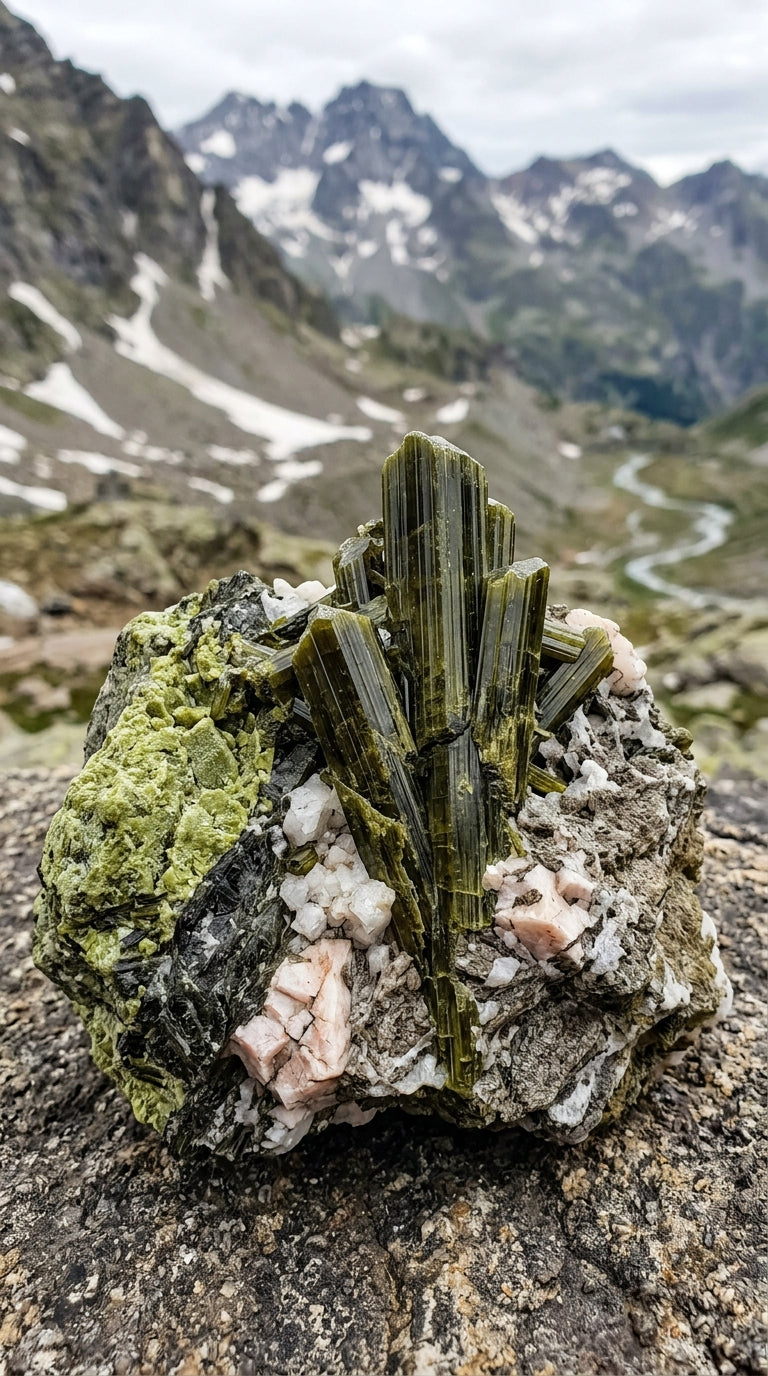
SOROSILICATE · CA₂(AL,FE)₃(SIO₄)₃(OH) · OLIVE TO PISTACHIO GREEN · THE STONE OF AMPLIFICATION AND EXPERIENCED GROWTH
Identification
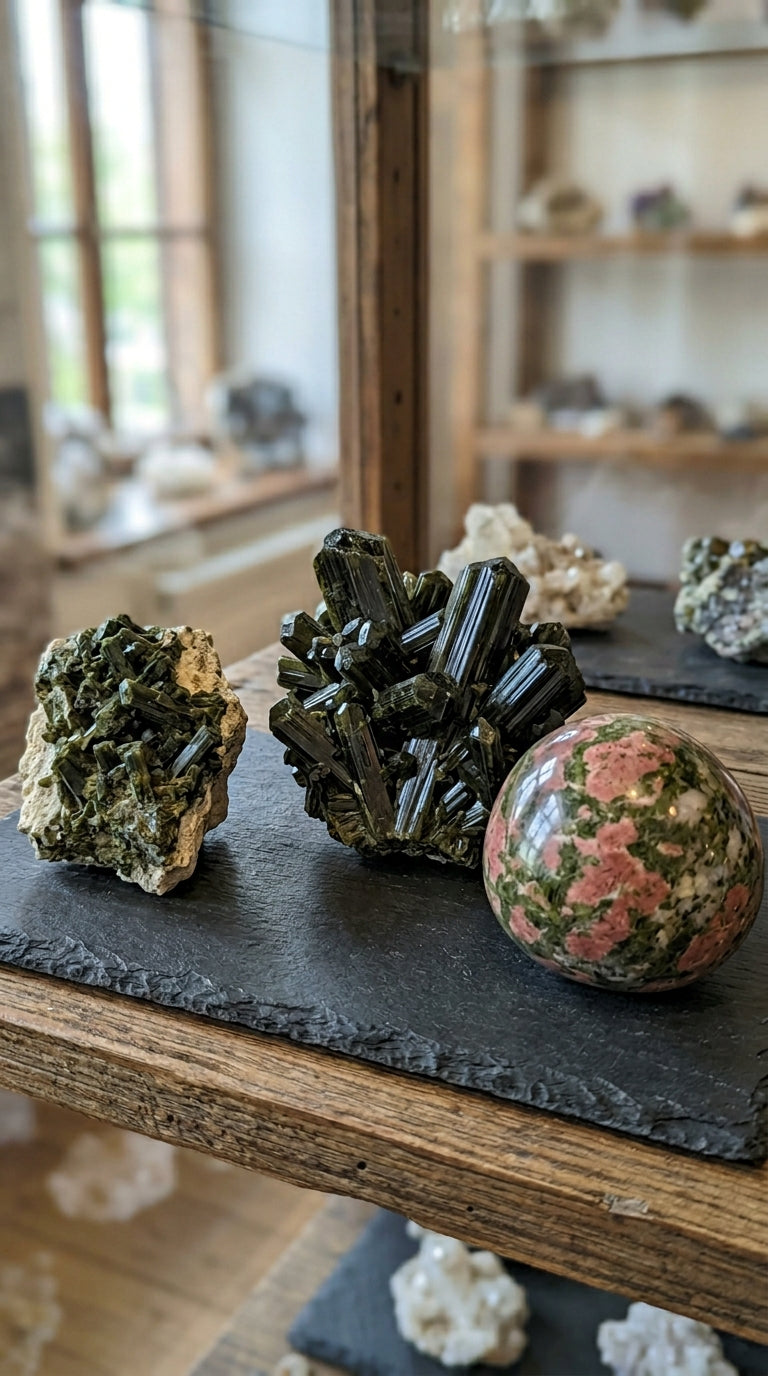
Sorosilicate de calcium, aluminium et fer · Ca₂(Al,Fe)₃(SiO₄)₃(OH) · groupe des épidotes avec zoïsite, clinozoïsite, piémontite
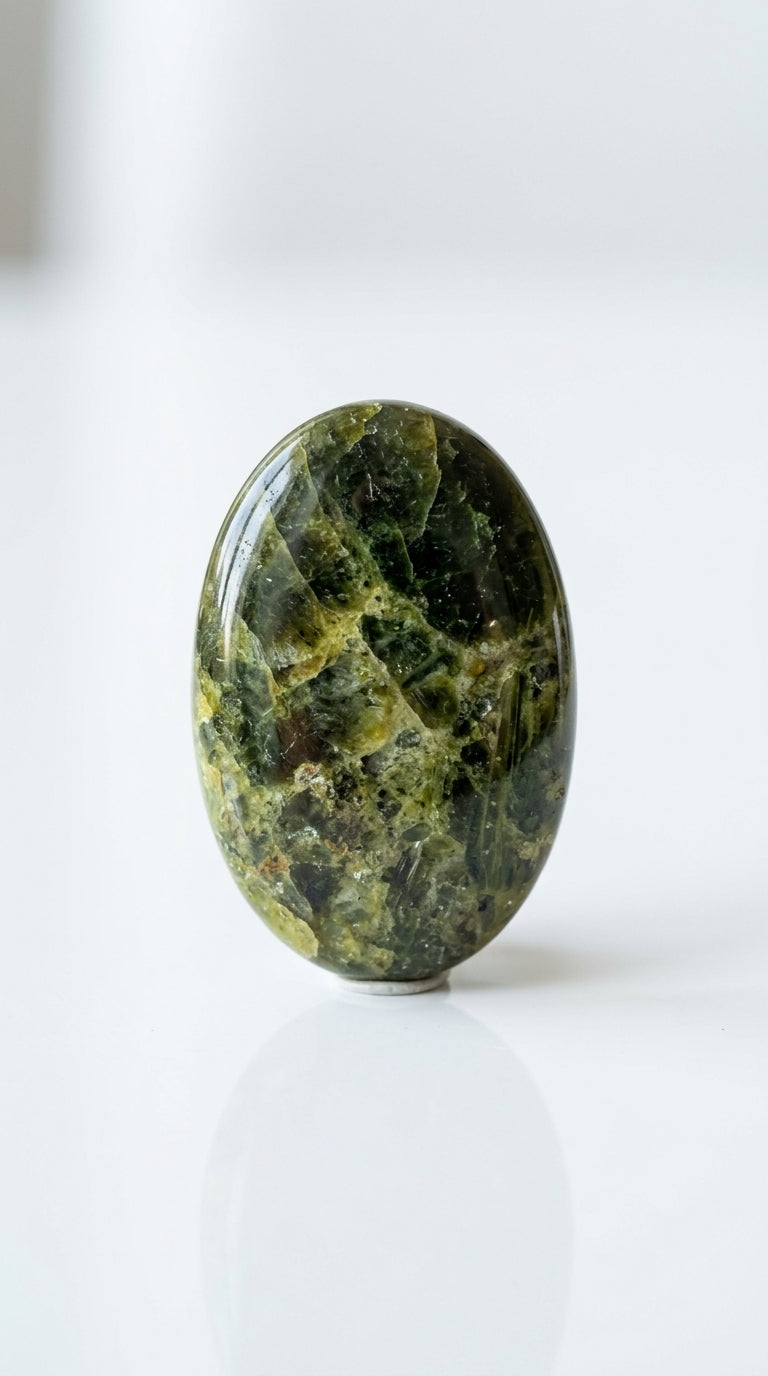
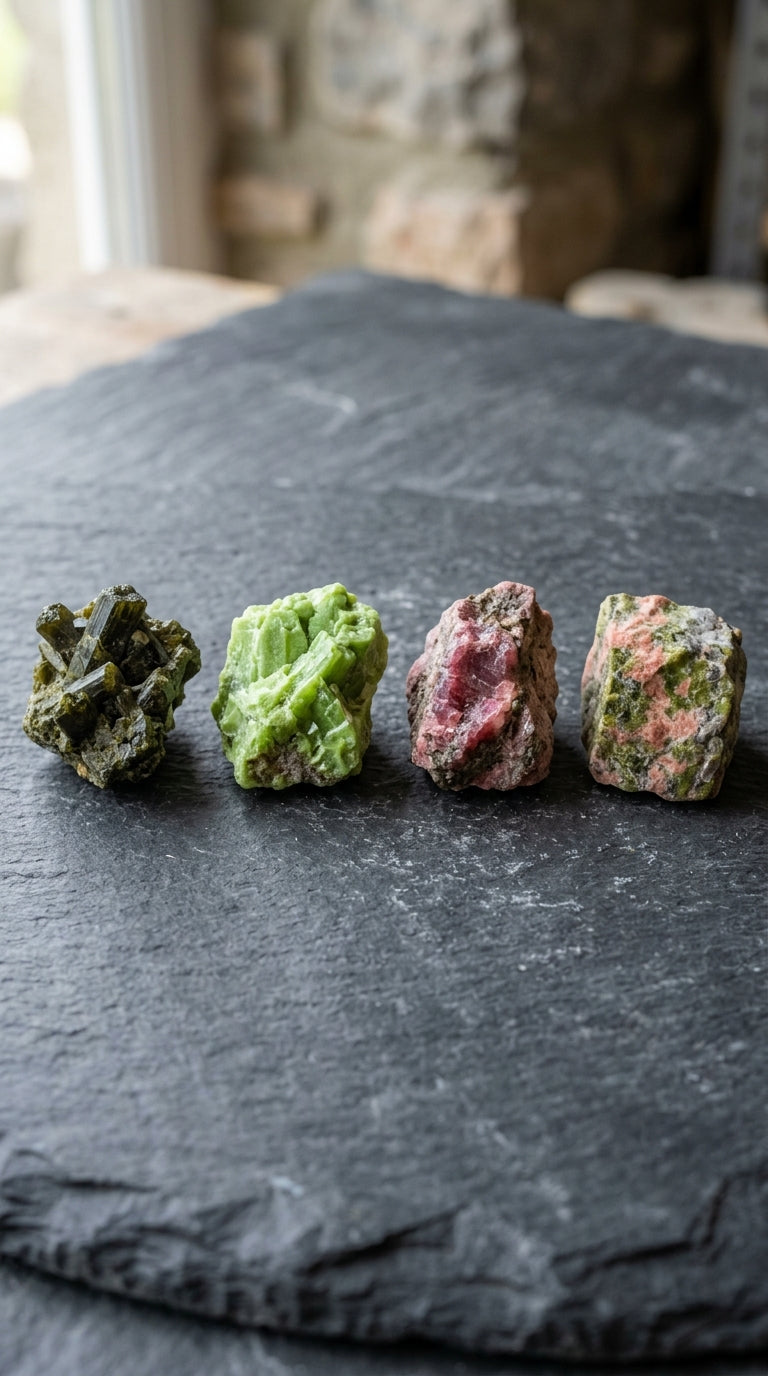
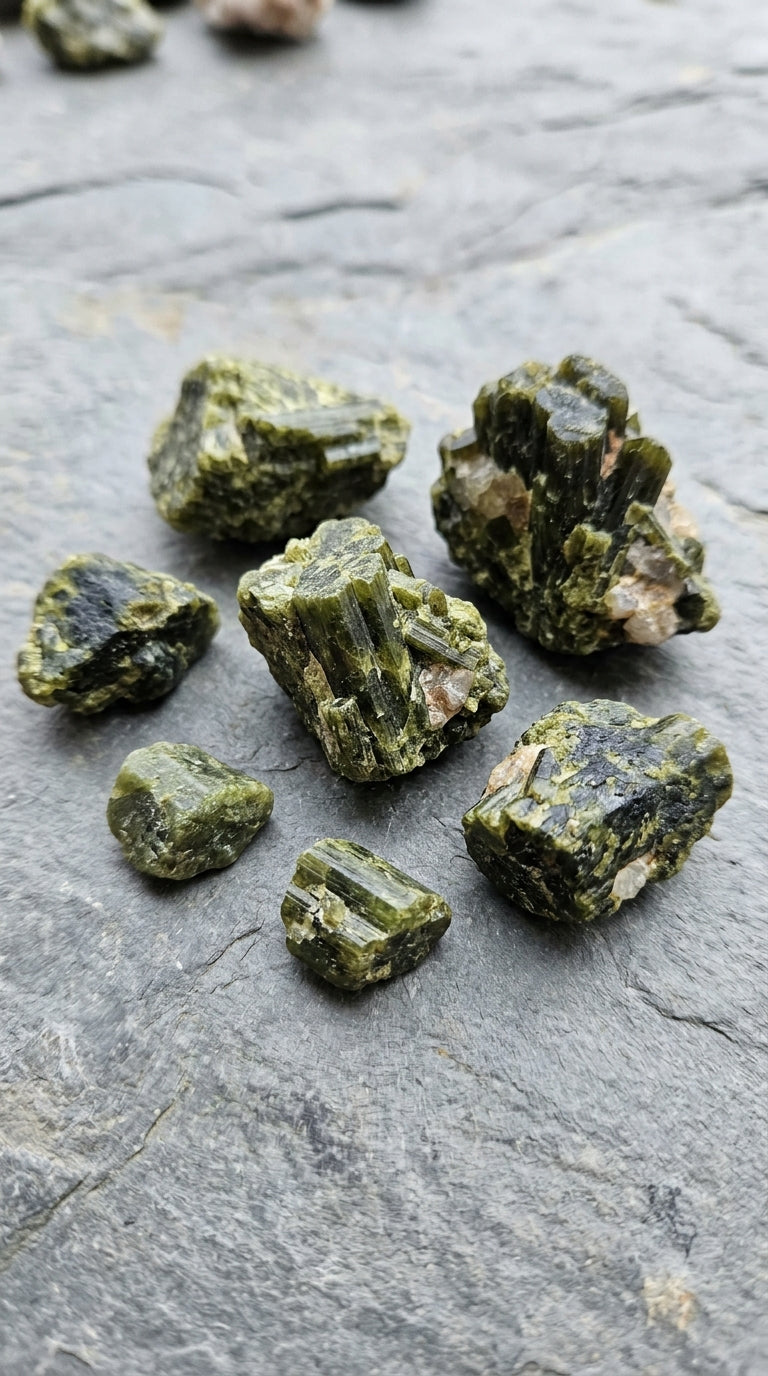
Vert olive à pistache · parfois brun-vert, jaune-vert ou presque noir · couleur due au fer (Fe³⁺) — plus de fer = plus sombre
6 à 7 / 10 — correcte, adaptée aux bijoux avec monture modérément protectrice
3,3 à 3,5 — relativement dense pour une pierre de cette taille
Cœur (4e) · Racine (1er) · Plexus solaire (3e)
Autriche (Knappenwand, Untersulzbachtal — référence mondiale) · Pakistan · Mexique · Norvège · USA (Alaska, Idaho) · Russie
Gémeaux · Taureau · Balance · Vierge
Du grec epidosis (augmentation, croissance) — référence à la forme du cristal où une face est plus longue que l'autre · découverte et nommée par René Just Haüy en 1801
Groupe des épidotes · inclut l'unakite (épidote + quartz rose + feldspath), la piémontite (rose/violet), la zoïsite
Offrande pour les projets de croissance et les amplifications d'intention
History & Myths
Mineralogy
Lithotherapy
Matches
Daily use

Interview


Monetization
| Pierre roulée / massive | Vert olive standard, lithothérapie courante |
3 € – 15 € |
| Pistachite cabochon (A) | Vert pistache vif, taillée, Mexique ou Norvège |
12 € – 45 € |
| Cristaux sur matrice (AA) | Prismes striés brillants sur matrice calcite |
30 € – 150 € |
| Spécimen Knappenwand (AAA) | Cristaux exceptionnels, qualité muséale, Autriche |
80 € – 600 €+ |
6 products
Our team of enthusiasts will respond within 24 hours · Free personalized advice
⚠️ Reminder: The meanings and virtues attributed to stones come from lithotherapy traditions and cultural symbolism. They do not constitute medical or psychological advice in any way.
Les vertus décrites relèvent de la tradition de la lithothérapie et ne constituent ni un avis médical ni un conseil de santé. En cas de problème de santé, consultez un professionnel.


