

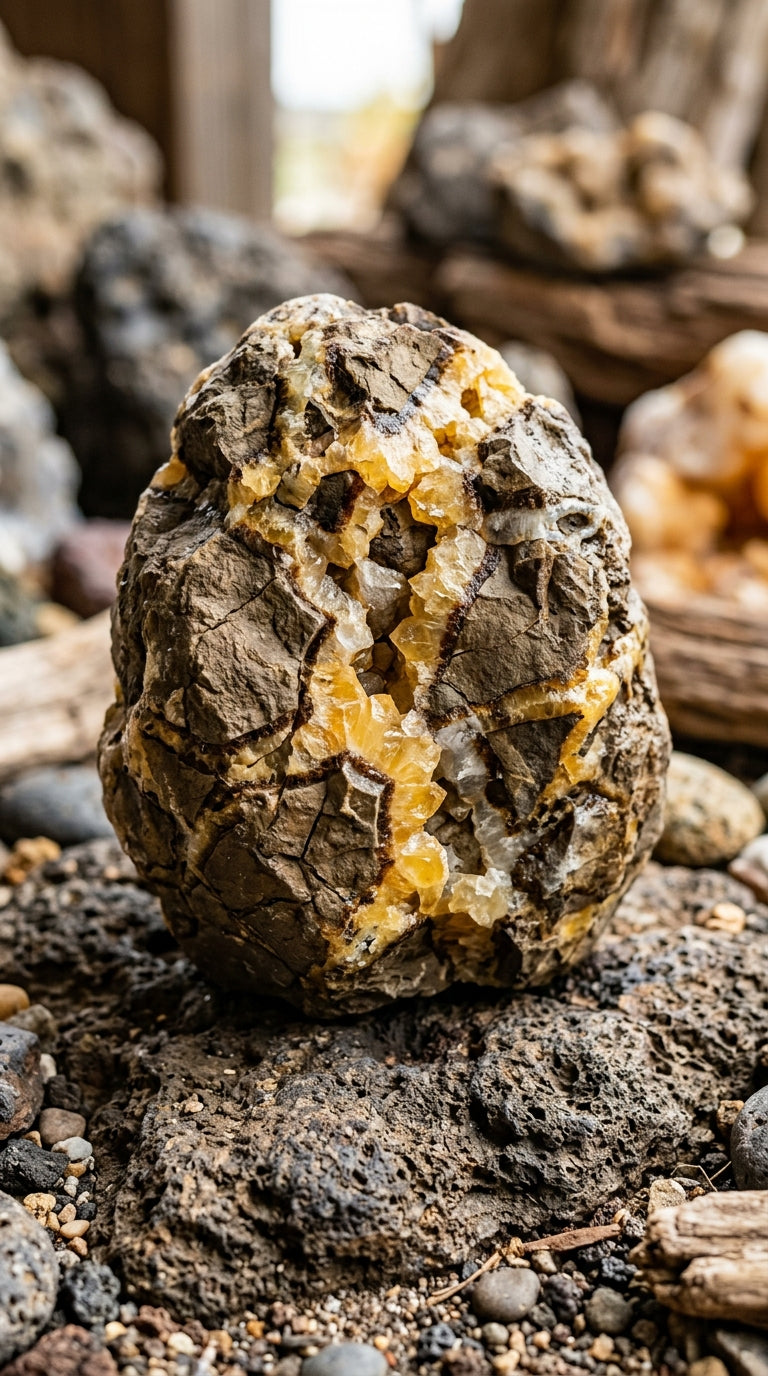
Heart septaria Madagascar A+ 60-70mm
- Anchoring
- Communication
- Stability


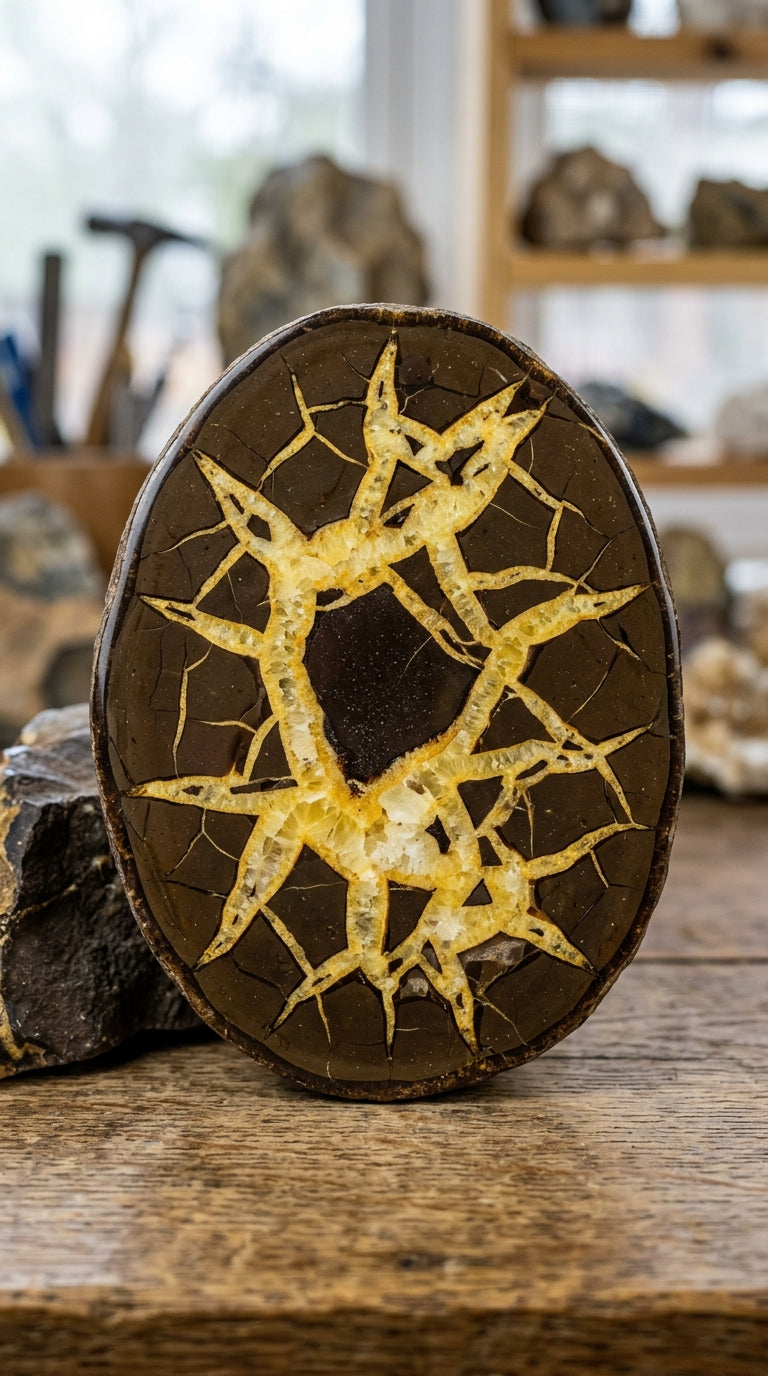
SEDIMENTARY CONCRETIONS · CLAY + CALCITE + ARAGONITE + SIDERITE · 70-50 MILLION YEARS OLD · THE MAP OF INTERIOR WORLDS
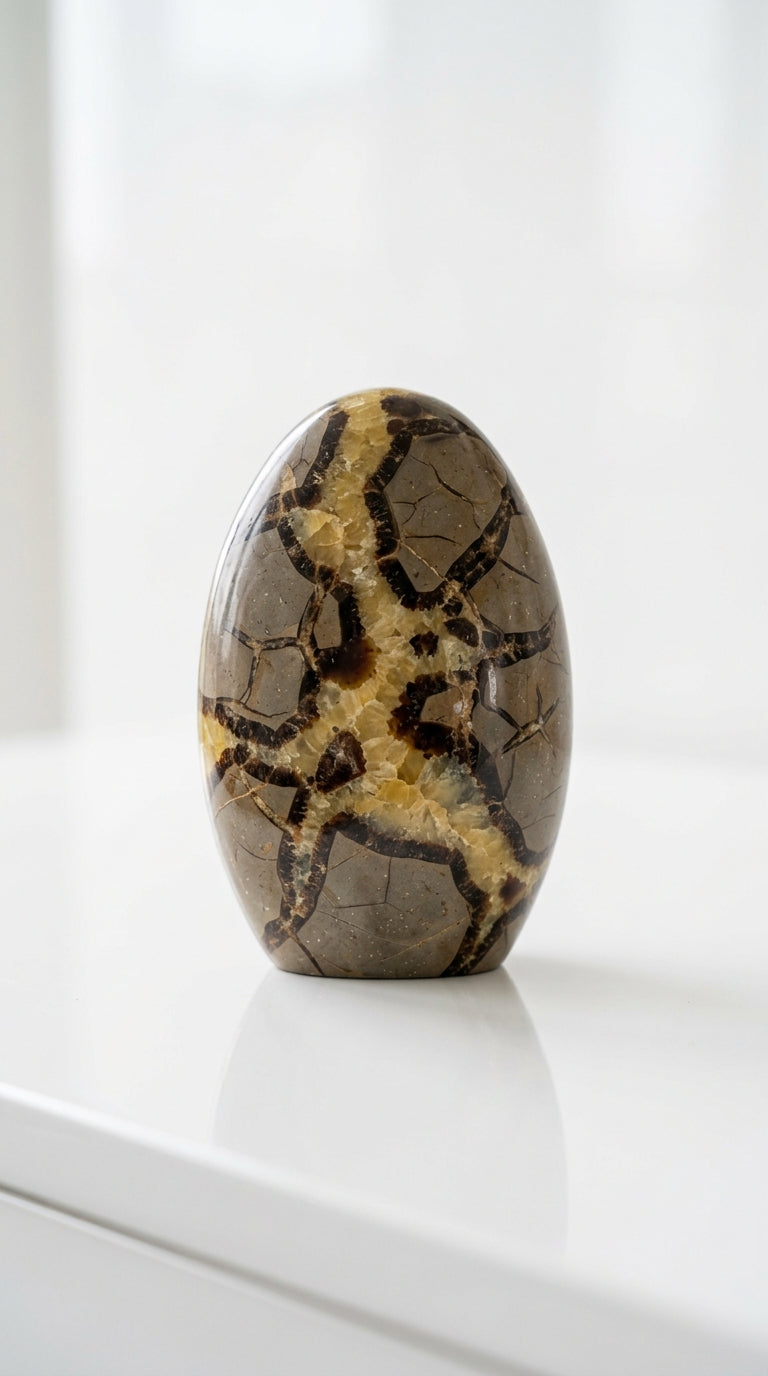
Identification
Concrétion sédimentaire · roche composite naturelle — pas un minéral pur mais une formation géologique unique
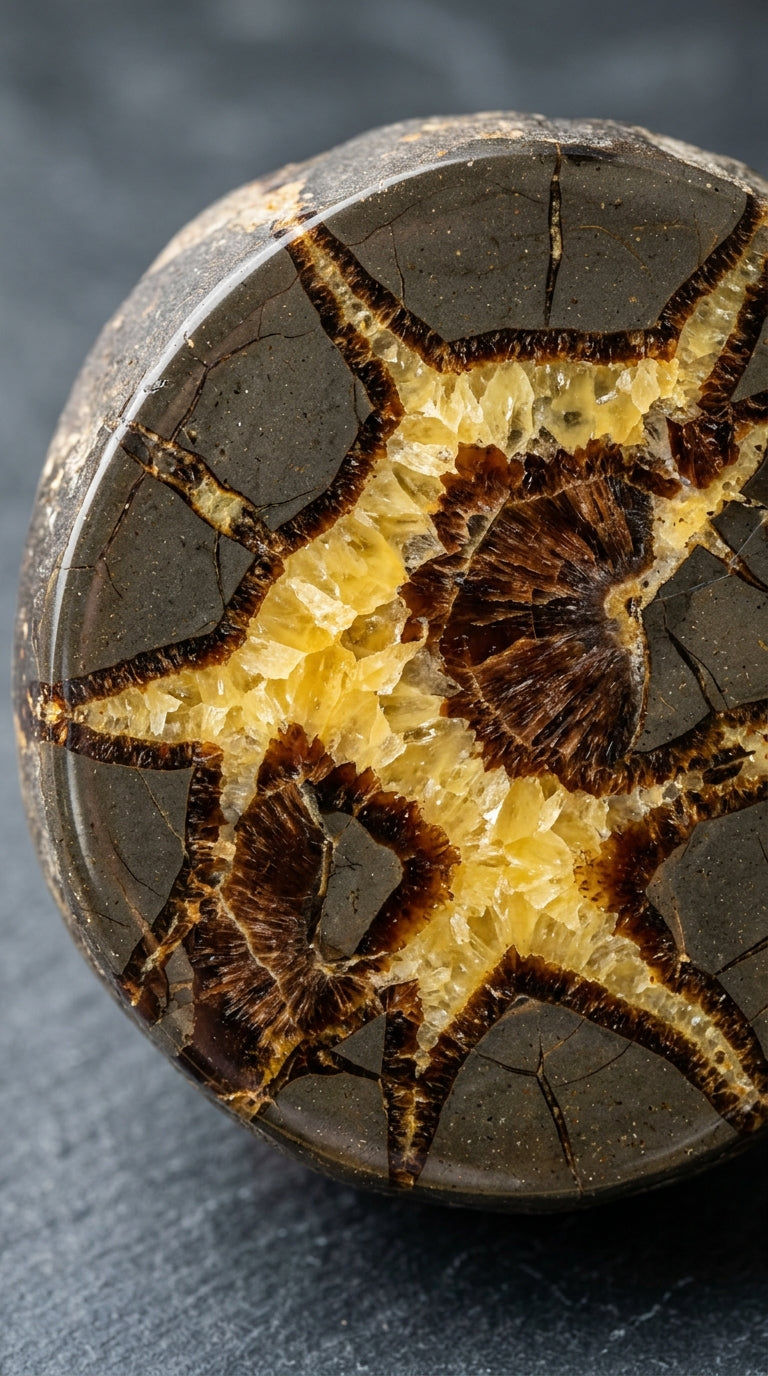
Argile durcie (fond brun-gris) + calcite jaune/dorée (veines principales) + aragonite brune (veines secondaires) ± sidérite, pyrite, baryte
Brun-gris à beige pour la matrice argileuse · jaune doré à orangé pour les veines de calcite · brun profond pour l'aragonite
3 à 4 / 10 selon les zones · tendre — à manipuler avec soin, éviter les chocs
2,5 à 2,8 selon la composition
Racine (1er) · Plexus solaire (3e) · Gorge (5e) · tous les chakras selon les zones de la pièce
Utah et Dakota du Sud (USA — référence mondiale) · Madagascar · Nouvelle-Zélande · Maroc · Canada · Angleterre
Taureau · Cancer · Capricorne · Scorpion
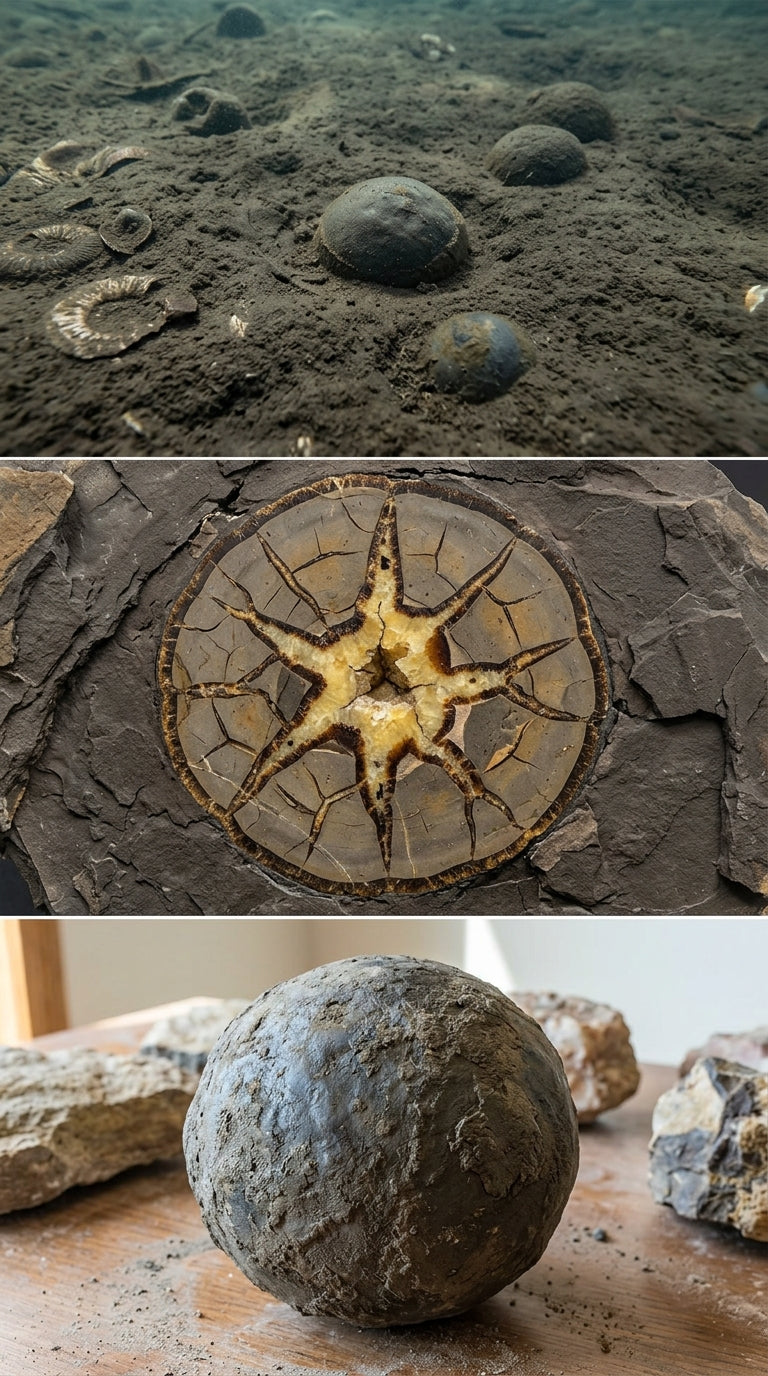
Principalement Crétacé supérieur à Éocène · 70 à 50 millions d'années
Du latin septum (cloison, séparation) · référence aux fissures internes qui divisent la concrétion en compartiments
Offrande pour les nouvelles maisons et les enracinements durables
History & Myths
Mineralogy
Lithotherapy
Matches
Daily use

Interview


Monetization
| Pierre roulée standard | Motif visible, poli correct, petite taille |
4 € – 15 € |
| Tranche polie (A) | Coupe révélant le réseau de veines, belle taille |
15 € – 50 € |
| Pièce premium (AA) | Veines denses et contrastées, plusieurs couleurs, grande taille |
40 € – 150 € |
| Pièce d'exception (AAA) | Motif "carte du monde" spectaculaire, très grande taille |
100 € – 500 €+ |
11 products


Our team of enthusiasts will respond within 24 hours · Free personalized advice
⚠️ Reminder: The meanings and virtues attributed to stones come from lithotherapy traditions and cultural symbolism. They do not constitute medical or psychological advice in any way.
The properties described come from the tradition of crystal healing and are neither medical advice nor health advice. For any health problem, consult a professional.


