



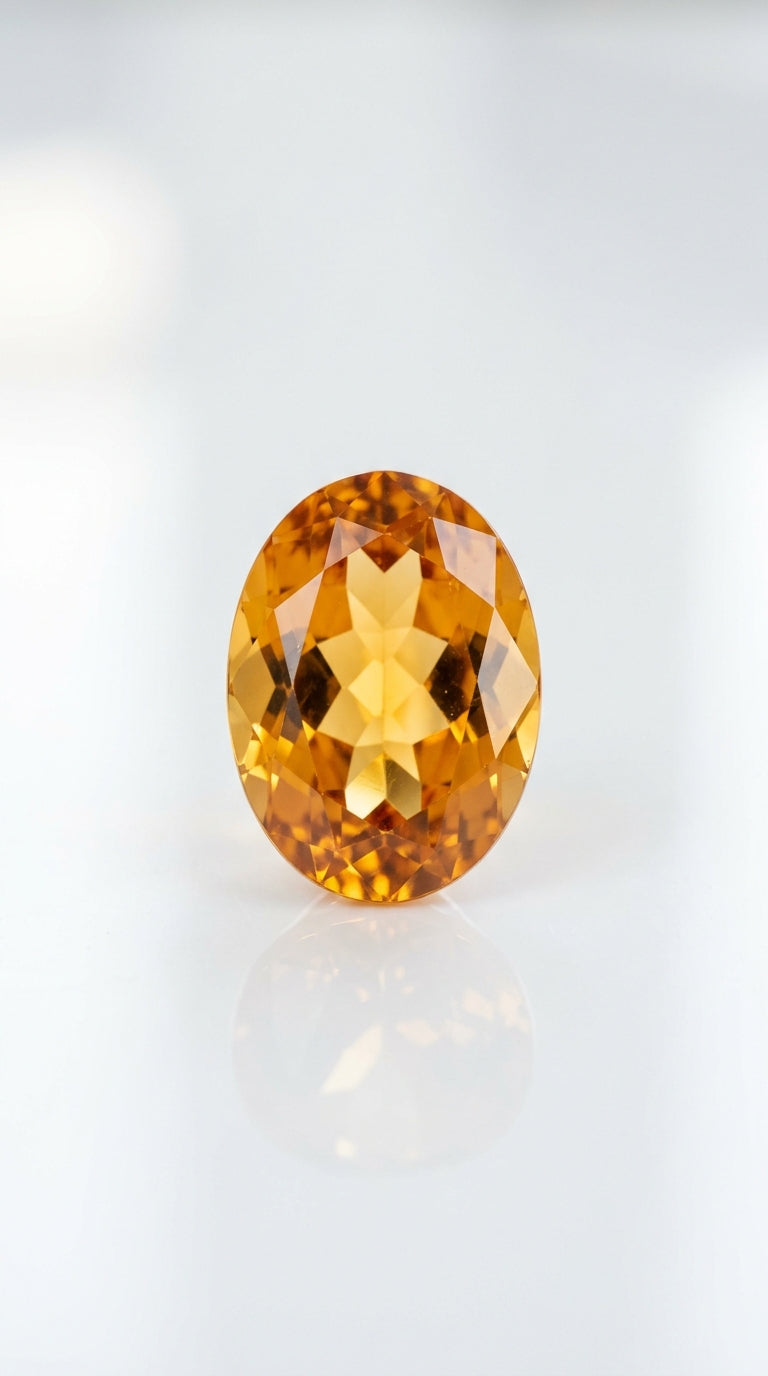
Identification
Identity sheet
Composition
Fluosilicate d'aluminium · Al₂SiO₄(F,OH)₂ · nésosilicate avec fluor et hydroxyle
Couleur naturelle
Incolore (pure), jaune, orange, brun-orange, rose, bleu pâle — la topaze bleue commerciale est presque toujours irradiée
Dureté
8 / 10 sur l'échelle de Mohs — très dure, résistante aux rayures, mais clivage parfait (fragilité aux chocs)
Densité
3,49 à 3,57 — relativement lourde pour sa taille
Chakra(s)
Plexus solaire (3e) · Gorge (5e) · Couronne (7e) selon la couleur
Gisements
Brésil (Ouro Preto — référence) · Sri Lanka · Russie (Oural) · Pakistan · Nigeria · Mexique
Zodiaque
Scorpion · Sagittaire · Lion · Gémeaux
Étymologie
Du grec topazios — île de la mer Rouge (actuelle Zabargad) où des péridots furent confondus avec la topaze dans l'Antiquité
Pierre du mois
Pierre de naissance de novembre (topaze jaune/orange) et décembre (topaze bleue)
Noces
Pierre des noces de topaze — 23 ans de mariage (topaze impériale)
Our topaz creations
Our topaz selection
18 products
-

-
 925 silver AAA larimar and topaz ring
- Serenity
- Communication
- Letting go
-

-

-


-


-

 AAA Zimbabwe Blue Topaz Bracelet (7.5-8.5mm Balls)
- Trust
- Clarity
- Joy
-

 AA Brazilian blue topaz bracelet (3-4mm balls)
- Trust
- Clarity
- Joy
-


-


-


-


Lithotherapy
Virtues & Benefits
Monetization
Price & Quality Criteria
| Topaze bleue traitée | London Blue, Swiss Blue, Sky Blue — irradiée |
5 € – 30 € / ct |
| Topaze jaune naturelle | Jaune à doré non traité, Sri Lanka ou Brésil |
20 € – 100 € / ct |
| Topaze impériale (AA) | Orange-cognac, Ouro Preto, non traitée, 1-3 ct |
150 € – 600 € / ct |
| Topaze impériale (AAA) | Couleur pêche intense, >5 ct, Ouro Preto certifié |
500 € – 3 000 €+ / ct |
These stones go well with topaz


A question about lithotherapy?
Our team of enthusiasts will respond within 24 hours · Free personalized advice
⚠️ Reminder: The meanings and virtues attributed to stones come from lithotherapy traditions and cultural symbolism. They do not constitute medical or psychological advice in any way.